|


www.libyanconstitutionalunion.org
&
www.libyanconstitutionalunion.net
&
www.lcu-libya.co.uk
|
|
|
بسم الله الرحمن الرحيم

محمد بن غلبون
لـ«الشرق الأوسط»:
القذافي
سيتوجه إلى سرت إذا فقد السيطرة على طرابلس
رئيس الاتحاد الدستوري الليبي:
سيناريو التدخل الخارجي مستبعد.. والحديث عن إمارات إسلامية موجه للغرب
الجمعـة 22 ربيـع الاول
1432 هـ 25 فبراير 2011 العدد 11777
قال بن غلبون، في حديث خاص لـ«الشرق الأوسط»، إن تهديدات القذافي بتحول
ليبيا إلى إمارات إرهابية يسيطر عليها الإسلاميون وتنظيم القاعدة،
تستهدف فقط إثارة قلق ومخاوف الغرب، مؤكدا أن هذا السيناريو غير وارد
على الإطلاق.
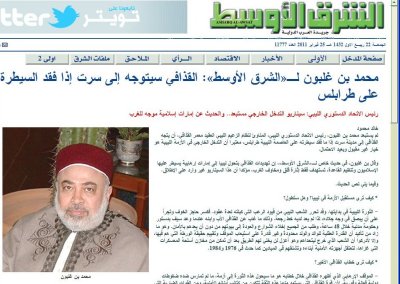
.jpg)
محمد بن غلبون
وفيما يلي نص الحديث.
*
كيف ترى مستقبل الأزمة في ليبيا؟ وهل ستطول؟
-
الثورة الليبية في بدايتها. وقد تحرر الشعب الليبي من قيود الرعب التي
كبلته لعدة عقود. فكسر حاجز الخوف وتجرأ على أن يبصق في وجه جلاده، لذا
لم يعد لديه خط رجعة. وذلك ما غاب عن القذافي الأب وابنه عندما وعد سيف
بدستور وحكومة مدنية خلال 48 ساعة، وطلب من الجميع إخلاء الشوارع
والعودة إلى بيوتهم من دون أن يعدهم بالأمان. وهو ما زاد من تأكيد أن
القدرة العقلية للوالد والولد محدودة وغير قادرة على استيعاب الموقف
وتقييم حقيقة الورطة التي هم فيها، وإلا لأدركوا أن الشعب الذي خرج
ليتحداهم وهو أعزل لن يخلي لهم الطريق بعد أن تمكن من مخازن أسلحة
المعسكرات التي غزاها، لتعتقل أجهزته الأمنية أبناءه وتشنقهم في
الميادين كما حدث في 1976 و1984.
*
كيف ترى خطاب القذافي الأخير؟
-
الموقف الإرهابي الذي أظهره القذافي خلال خطابه هو ما سيحول هذه الثورة
إلى أزمة، ما لم تمارس ضده ضغوطات دولية فعالة وفورية. لأن قوة القذافي
التي يستمد منها هذه الثقة تتكون من كتائب أبنائه الأمنية، ومن القوات
الضاربة التي فيما يعرف في ليبيا بالمنطقة الوسطى. وقد انتصر الشعب على
الكتائب الأمنية إلا أن المنطقة الوسطى ما زالت خارج المواجهة حتى الآن.
*
وكيف حدث هذا؟
-
دعني أحدثك عن المنطقة الوسطى. إنها كما تسميتها، وسط البلاد حيث موطن
قبيلته (القذاذفة) وحلفائها الكثيرين من القبائل المحيطة بتلك المنطقة
التي عاصمتها سرت. وأنفق القذافي مبالغ خيالية خلال العقدين الماضيين
لربط قبائل المنطقة بتحالفات مع قبيلته، فأجزل لهم العطاء ومكنهم من
المناصب، وأنجز لهم كل ما طلبوا من خدمات وتسهيلات ومزايا عن بقية فئات
الشعب، كما جعل من سرت عاصمة على أحدث طراز تتوفر فيها جميع ما تحتاجه
عاصمة مهمة، وهي البعيدة عن كل شيء في وسط البلاد، التي توجد بها عواصم
عريقة مثل طرابلس وبنغازي، وكان ذلك مثار تعجب الناس ولا يجدون له
تفسيرا مقنعا، وقد بدا وكأنه يجعل من تلك المنطقة إقليما رابعا يضاف
إلى أقاليم ليبيا الثلاثة، طرابلس وبرقة وفزان.
ولكنه كان يعد المنطقة لمثل هذه الظروف، فبالإضافة لما ذكرت فإنه أنشأ
بها قاعدة جوية كبيرة وميناء بحريا متطورا، وأسس فيها أكبر قوة ضاربة
في البلاد جُل جنودها من أفراد قبيلته وحلفائها، وتتمتع هذه القوة
بأحسن تدريب وإعداد وعدة وعتاد، وتنعم كذلك بأحسن الأوضاع المالية في
البلاد.
فهو اليوم لا بد أن تراوده خيارات، أحدها أنه قد يلجأ إلى قواته في
المنطقة الوسطى لفرض سيطرته على المدن والمناطق التي رفضته وثارت عليه،
وهذه هي الحرب الأهلية الوحيدة التي يمكن أن تقوم. أي بين غالبية الشعب
الثائر بقبائله ومدنه التي تفصلها مساحات شاسعة تمنعها للأسف من التكتل
وتوحيد الصفوف والجهود في مواجهة القوات الموالية للقذافي، التي ستكون
من قبيلته وحلفائها الذين سيطالبهم الآن بالوفاء بالتحالفات التي قبضوا
ثمنها مسبقا.
*
وهل بقيت لدى القذافي أي خيارات أخرى
محتملة؟
-
الخيار الآخر الذي قد يلجأ إليه هو أن ينتقل من طرابلس، متى فقد
السيطرة عليها، إلى سرت.. فتحتل قواته مصافي النفط وموانئ تصديره في
البريقة والسدرة ورأس لانوف القريبة من المنطقة الوسطى، والبعيدة عن أي
تجمع سكاني آخر. ويجلس على عرش إمارة صغيرة في وسط البلاد، تتحكم في
بترول البلاد كله. لها قوة ضاربة منظمة ومدربة ومجهزة آخر تجهيز، ويترك
بقية البلاد لتحترق بنيران ثورتها بلا ماء ولا كهرباء ولا أي شكل من
أشكال النظام ليدير شؤونها.
*
على أي شيء يراهن هنا؟
-
سيراهن على أن شركات البترول ستخدمه حرصا على مكاسبها، كما ستتعامل معه
دول الغرب، كما عودته من قبل، لعدم رغبتها في الاستغناء عن بتروله في
هذه الظروف المالية المتأزمة التي تخيم على اقتصادها، وعندها ستطول
الأزمة وتتفاقم.
الاحتمال الكبير هو أن يرفض أفراد قبيلته إيواءه وتنفيذ أوامره. وذلك
أمر غير مستبعد ولا مستغرب، فقد جهروا له بنفورهم من ممارساته أكثر من
مرة في العقدين السابقين، وعاقب الكثير ممن تجرأوا على شجب مخططاته.
فقبيلة القذاذفة واحدة من مكونات الشعب الليبي ذات الرصيد العريق في
البلاد، التي رفعت السلاح، في تحالف تاريخي مع قبيلة ورفلة، في وجه
طغيان الدولة القرمانلية عندما زاد جورها واستبدادها بأبناء الوطن.
كذلك فإنه إذا اقترب الخطر من ذاته، فإنه سيفقد رباط جأشه الزائف لما
عُرف عنه من جبن وعشق لنفسه، وعندها سيفر ويخلي الساحة.
*
هل تتوقع حدوث تدخل خارجي؟
-
التدخل الخارجي أمر غير مقبول، وكذلك فهو بعيد الاحتمال بعد افتضاح أمر
الحرب على العراق وفشل تلك التجربة.
*
من في تقديرك يدير الثورة في الداخل؟
-
الأمر الرائع في هذه الثورة المباركة في ليبيا هي أنها فاجأت حتى
المواطنين الذين أشعلوها. فلا أحد كان يتوقع سرعة اشتعالها ومبلغ
قوتها. وهي ثورة زخمها منها، لم يخطط لها في الخارج ولا تسير منه.
*
ماذا عن مواقف المعارضة الليبية بالخارج؟
-
إن المعارضة الليبية في الخارج تسير الآن خلف هذه الثورة وتدعمها
وتساندها، ولكنها لم تشعلها ولا نفوذ ولا تأثير لها عليها.
*
كيف ترى مواقف سيف الإسلام نجل القذافي؟
-
لقد أضاع الولد فرصته الأخيرة في حكم ليبيا بكلمته التي ألقاها الأحد
الماضي والموقف الذي اختاره. فكل مجهوداته خلال السنوات الماضية للظهور
بمظهر الوجه الناصع للنظام ذهبت أدراج الرياح، ورأى الليبيون بوضوح
وتيقنوا من أنه ليس إلا الوجه الآخر لنفس العملة الصدئة. فعندما هدد
أبناء الشعب وتحدث لهم بسبابة إصبعه، كما لو أنهم كانوا عبيده، رأى
الناس نفس الصلف والغطرسة والجبروت التي خبروها جيدا في أبيه؛ فقد برهن
على أنه شخص لا يمكن الثقة به ولا الاعتماد عليه، بالإضافة للأخطاء
الفادحة في تقدير الأمور التي بينت أنه أبعد ما يكون عن رجل الدولة
الكفء الذي يمكن أن يحكم البلاد.
*
هل تتخوف من سيطرة الإسلاميين، كما يقول
القذافي وابنه، على مقدرات الأمور لاحقا؟
-
أعتقد أن التهديد بتشرذم البلاد وتحولها إلى إمارات إسلامية كان موجها
بالدرجة الأولى إلى الغرب لترويعه من وقوع ما يحتاجه من نفط في يد
المتطرفين، وحثهم على التمسك به، لأن الليبيين يعرفون جيدا أن هذا
السيناريو غير وارد على الإطلاق، ولا مؤشرات ولا بوادر لاحتمال حدوثه.
|
|
يمكن الاطلاع على نص المقابلة في موقع الصحيفة باتباع هذه الوصلة |
|
http://www.aawsat.com/details.asp?section=4&issueno=11777&article=609860&state=true |
|
|
|
|
|
|
|
عودة إلى صفحة المقالات |
|
|
 |
|
|
عودة إلى أعلى الصفحة |
|

|
|
|
|
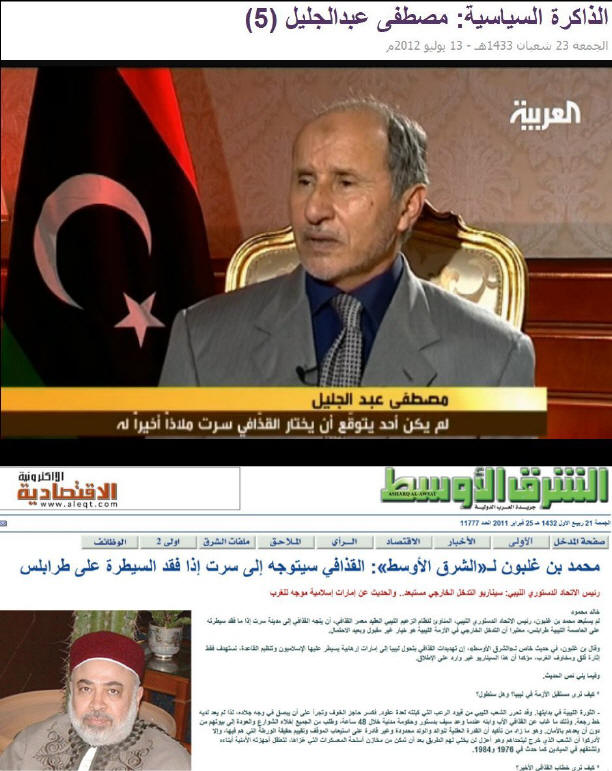
محمد بن غلبون توقع لجوء القذافي إلى سرت
ومصطفى عبد الجليل يقول لم يكن أحد يتوقع ذلك |
|
|
|
 |
|
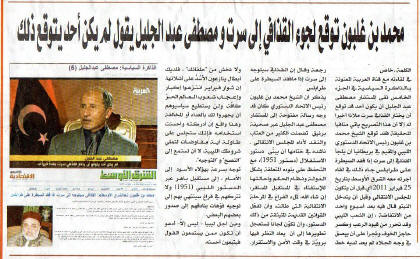
الكلمة خاص
في
لقاءاته مع قناة العربية المعنونة بالذاكرة السياسية في الجزء الخامس
نفى المستشار مصطفى عبد الجليل أن يكون أحد قد توقع أن يختار القذافي
سرت ملاذا أخيرا له إلا أن هذا التصريح يأتي منافياً للحقيقة فقد توقع
الشيخ محمد بن غلبون رئيس الاتحاد الدستوري الليبي والمقيم في بريطانيا
أن يلجأ القذافي إلى سرت إذا فقد السيطرة على طرابلس جاء ذلك في لقاء
أجرته معه الشرق الأوسط بتاريخ 25 فبراير 2011 أي قبل أن يتكون المجلس
الانتقالي وقبل أن يتدخل النيتو قال فيه بعد أسبوع واحد من
الانتفاضة
: إن
الشعب الليبي وقد تحرر من قيود الرعب وكسر حاجز الخوف وتجرأ على أن
يبصق في وجه جلاده لم يعد لديه خط رجعة وقال إن القذافي سيتوجه إلى
سرت إذا ما فقد السيطرة على طرابلس.
يذكر
أن الشيخ محمد بن غلبون رئيس الاتحاد الدستوري الليبي كان قد وجه
رسالة مفتوحة إلى المستشار
مصطفى عبدالجليل عبر صحيفة برنيق تضمنت الكثير من العتاب
والنقد لأداء المجلس الانتقالي ناشده في ختامها أن يتبنّى دستور
الاستقلال (دستور 1951)، مع التحفظ على بنوده المتعلقة بشكل الدولة
ونظام الحكم وإحالتها للإستفتاء في المستقبل المستقر، إن شاء الله،
لملء الفراغ في المرحلة الانتقالية التي طالت، وأن تفعّل القوانين
القديمة المنبثقة من ذلك الدستور، وأن تكوّن لجاناً تستعجل تطويرها إلى
أن يعاد النظر فيها برويّة في وقت الأمن والإستقرار. ولا تخش من
"حلفائك"، فلديك أبطال ينازعون الأسُد على أشلائها. إن ثوار فبراير
انتزعوا إكبار العالم الحرّ كافّة، ولن يستطيع سياسيوهم أن يجهروا لك
بالعداء أو المخالفة وهذا واقع إن أدركته وأحسنت استخدامه فإنك ستجلس
على طاولة أية مفاوضات لتملي شروطك الليبية، لا أن تستمع إلى "النصح" و
"التوجيه".
توجه
بسرعة بهؤلاء الأسود إلى الأمام، إلى مستقبل باهر عبر الدستور الليبي
(1951) ولا تتركهم في فراغ سينتهي بهم إلى توجيه فوّهات بنادقهم إلى
صدور بعضهم البعض.
ومن
أجل ليبيا –ليس إلاّ- أدعو أن تكون ممن يستمعون القول فيتبّعون أحسنه. |
|
نشرت في العدد رقم 63 من صحيفة الكلمة الصادر في 22
يولية 2012 |
|
|
|
|
|
|
|
عودة إلى صفحة المقالات |
|
|
|
|
|
عودة إلى أعلى الصفحة |
|
|
|
|
|
|
|
Translation from Arabic of the Libyan Constitutional Union
Chairman’s
Interview with Asharq Al-wast Newspaper
Mohamed Ben
Ghalbon to Asharq Al-Awsat :
“Gaddafi will head for Sirt
if he
loses his grip on Tripoli”
|
 |
|
|
|
The
Chairman of the Libyan Constitutional Union: |
| |
|
“External involvement in
Libya is
farfetched and the talk of regional Islamic mini states is
directed to the West”. |
|
Mohamed Ben Ghalbon |
Friday 22nd February 2011 (No.
11777)
| |
|
In an exclusive interview with Asharq Al-Awast,
Ben Ghalbon said that Gaddafi’s threats that Libya would turn
into terrorist Islamist states under the control of Al Qaeda,
was made to cause anxiety and alarm in the West; and confirmed
that this scenario is totally unfounded. |
|
|
Q: How do
you envisage the prospects of the present turmoil in Libya? And
would it be prolonged?
A: The Libyan revolution is at its
beginning and the Libyan people have now been liberated from the
shackles of terror which fettered them for decades. They have broken
the barriers of fear and dared to spit in the face of their
tormentor. They have reached the point of no return and there is no
way back now. These are the facts that escaped Gaddafi and his son
Seif when the latter promised a constitution and a civil government
within 48 hours of his address to the nation. He asked the
protestors to empty the streets and go back to their homes without
promising them any assurance of amnesty if they complied.
This is added
confirmation of the limitation of their ability to comprehend the
extent of the predicament they are in and appreciate its dire
consequences. Had the Gaddafis any measure of sense, they
would have realized that the unarmed people, who took to the streets
and defied them, would not give their security agencies a chance to
arrest and execute their sons in public squares (as they did in 1976
and 1984), especially now that the people have raided military camps
and seized weapons.
Q: How do
you appraise Gaddafi’s latest speech?
A:
The terrorist stance taken by Gaddafi in his speech will change the
revolution into a crisis unless effective and immediate pressures
are exerted on him by the International community. For Gaddafi’s
power base comes from the security brigades controlled by his sons
and from the Special Forces in what is known in Libya, as the
“middle region.” The people achieved victory over the security
brigades however; the middle region is still not involved in
confrontations up to now.
Q: How did
this happen?
A:
Let me tell you about the middle region (in Libya). This region, as
the name suggests, is situated in the middle of the country and it
is where Gaddafi’s tribe (Al Gaddafis) lives with their allies in
the neighboring areas with Sirte being the capital of the region.
During the last two decades, Gaddafi spent incredible amounts of
wealth to bind the tribes in the region into alliances with his own
tribe. He gave generously, awarded many with prominent government
positions, and met their wishes of services and advantages over the
rest of the public. Gaddafi made Sirte a capital with all the
modern facilities fit for an important capital city. He did so
despite the fact that Sirte is, in reality, far from every
significant spot in the country where historically established
capital cities such as Tripoli and Benghazi exist. The decision to
make a capital out of Sirte was surprising and people could not see
a convincing reason. Gaddafi embarked on developing the middle
region as if to add a fourth province to the three Libyan provinces:
Tripoli, Cyrenaica and Fezzan.
However, Gaddafi was in fact
preparing the region for circumstances such as those we see in the
present situation. In addition to the above, he also established a
substantial air base and an advanced sea port in the area and built
one of the largest special response army units (crack troops) in the
country with soldiers from his tribe and their allies. These
special units received advanced training, were equipped with the
best weaponry he could buy and their members enjoyed the most
generous monetary rewards in the country.
No doubt Gaddafi is considering
certain options. One of these would be to deploy his forces in the
middle region to enforce his reign on the towns which rejected his
rule and rose against him. This would be the only civil war likely
in the country. That is, a conflict between the rebelling majority
of the Libyans, (with tribes and towns sadly separated by vast
distances which hamper their amalgamation into a proficient unified
power) and the forces loyal to Gaddafi made up of members of his
tribe and their allies. The allies will now be expected to honour
the conditions of the pacts with Gaddafi for which they had received
rewards in advance.
Q: Does
Gaddafi have any other alternatives?
A:
The alternative to which Gaddafi may turn to is to move to Sirte if
he loses control of Tripoli. His forces will seize control of the
oil refineries and seaports in Brega, Sidra and Ras Lanuf situated
near the middle region which is isolated from other inhabited areas
by vast expanses of desert. He could reign over the small province
(an Emirate) in control of the country’s oil and protected by forces
equipped with the latest weaponry and training. Leaving the rest of
the country consumed in the fire of its own revolution without
water, electricity or a functional system to manage its affairs.
Q: What
would he bet on in this case?
A: Gaddafi will bank on the oil
companies assisting him to protect their interests. Similarly, he
will bank on the West dealing with him as they have willingly done
so in the past; assuming in the present harsh economic conditions
the West does not have the will to do without his oil. If the oil
companies and the West deliver, the crisis in Libya will go on for a
long time and worsen.
It’s highly probable that his tribe
might refuse to provide him with shelter or obey his orders.
This scenario is possible as the Gaddafis have in the past two
decades confronted him more than once with disapproval of some of
his actions. And he has punished many of them for daring to voice
their disapproval. One must remember that the Gaddafis tribe is one
of the constituents of the Libyan people with an honorable history
of raising arms, together with their allies the Wirfalla tribe,
against the excesses of the Garamalli dynasty rule in the country 3
centuries ago (1717-1835).
Yet another possibility is that
once the Colonel, who is known for his cowardice and narcissisms,
senses danger nears his own person, he will rapidly lose his false
composure and flee the arena.
Q: Do you
expect foreign intervention?
A: Foreign intervention is totally
unacceptable and is most unlikely. Particularly in light of the
failures and consequences of the Iraq war and the disappointment of
that experience.
Q: Who in
your view is managing the revolution inside the country?
A:
The beauty of this blessed revolution is that it surprised even
those members of Libyan public who initiated it. No one could
imagine the speed with which it spread nor the extent of its power.
It is a revolution that generated its own momentum. No one outside
the country has planned it, nor is managing it.
Q. What about
the position of the Libyan opposition outside Libya?
A:
The Libyan opposition in exile is now following behind the
revolution, supporting and aiding it. The opposition abroad neither
ignited nor have any influence over it.
Q: How do you
view the position of Saif al-Islam, the son of Gaddafi?
This boy has squandered his last
chance to rule Libya by his speech last Sunday and the attitude he
chose to take in that speech. All his efforts to appear as the
polished and accepted face of the regime in the past years went up
in smoke. The Libyan people saw very clearly that he was merely the
other face of the same rusty coin. When he threatened and jabbed his
index finger at the Libyan people as if they were his slaves, they
recognised the arrogance, tyranny and conceited face of his despotic
father. Saif demonstrated that he is untrustworthy and unreliable.
He also showed a serious lack of comprehension of the situation.
This cemented (if anyone really needed proof) how inept he is, and
how incapable he is of ruling the country.
Q: Do you
fear Islamists taking control, as Gaddafi and his son claimed, of
the country’s affairs later?
A:
I believe that the threat made by Gaddafi of the collapse of the
country and its turning into small Islamite provinces was a scare
tactic, mainly directed at the Western world to alarm them that (if
Gaddafi is no longer in control) Libya’s oil and its resources will
fall into the hands of fundamentalist groups. This scare tactic is
aimed at the Western world to coerce them into supporting his rule.
The Libyans know very well that this scenario can never happen and
there are no indications of its possible occurrence.
http://www.aawsat.com/details.asp?section=4&issueno=11777&article=609860&state=true
|
| |
|
 |
|
|
| |
| |
|
|
|
بن غلبون
لـ "الشرق
الأوسط":
بطء أميركا
قد يترك للقذافي السيطرة على «إقليم
طرابلس"
رئيس الاتحاد الدستوري
الليبي يحذر من «خطط» لتقسيم ليبيا
الجمعـة 20 ربيـع الثانـى
1432 هـ 25 مارس 2011 العدد 11805 |
| |
| |
|
 |
| |
|
القاهرة:
خالد محمود/ أثار محمد بن غلبون، رئيس الاتحاد الدستوري
الليبي، المناوئ لنظام العقيد معمر القذافي، شكوكا في طبيعة العمليات
العسكرية التي
تشنها قوات التحالف الدولي ضد القوات العسكرية والكتائب الأمنية
الموالية للقذافي.
وقال بن غلبون لـ«الشرق الأوسط»: إنني أتخوف من أن الأميركيين يعطون
عمدا الوقت
الكافي للقذافي لإحكام قبضته على الغرب الليبي كله، ليترك متربعا على
ثلثي ليبيا
المتكون من إقليم طرابلس وإقليم فزان (الذي لم ينتفض عليه)، وبذلك يكون
متحكما في
أغلب النفط الليبي بعد أن استرجع راس لانوف والبريقة، ويستقل عنه إقليم
)برقة
(بالمساعدة
الأوروبية الذي سيكون الإقليم الأقل ثروة بترولية حيث لم يتبق له إلا
نسبة قليلة.
وأضاف بن غلبون: «وبذلك تقسم ليبيا لفترة طويلة لا يعلم مداها إلا الله
تحتاج فيها برقة للحماية الأوروبية من مطالبات القذافي ومحاولاته
العسكرية
لاستعادتها فتكون أميركا قد نفذت عدة مخططات يضاف إليها معاقبة الإخوة
الأعداء في
أوروبا على محاولتهم مزاحمة نفوذها وهيمنتها على ليبيا».
وأوضح بن غلبون أنه عندما تحركت قوات التحالف لفرض منطقة حظر جوي على
ليبيا عقب الحصول على الموافقة الدولية والغطاء القانوني لذلك، قسمت
المهام على ما
يبدو بين القوات المشاركة، بحيث غطت الطائرات والصواريخ البريطانية
والفرنسية الجهة
الشرقية من ليبيا (برقة) بينما تولت الطائرات والصواريخ الأميركية
الجهة الغربية من
البلاد (إقليم طرابلس). ولفت إلى أنه كان للتدخل الفرنسي السريع الفضل
في فك الحصار
عن مدينة بنغازي، عاصمة برقة، التي كانت محاصرة بدبابات القذافي
ومدافعه.
وقال بن غلبون: «كان يمكن لقوات القذافي دخولها بعد ساعات من القصف
المكثف لتلك الدبابات والمدافع، ومن ثم تدميرها وشنق مئات الثوار في
ميادينها
العامة كعادة القذافي في التعامل مع معارضيه، كما حدث في عامي 1976
و1984، إلا أن
التدخل الأوروبي الذي وضع أولوية إنقاذ المدينة ونجدة سكانها قبل
الانشغال بتدمير
الدفاعات الجوية للقذافي أثبت حسن النية الأوروبية والجدية في
المساعدة». لكنه
استطرد قائلا «الوضع في إقليم طرابلس كان ولا يزال مختلفا حيث انشغلت
الطائرات
والصواريخ الأميركية بضرب القواعد الجوية بحجة تعطيل الدفاعات الجوية،
كما ضربت بعض
الأهداف عديمة الأهمية في مدينة طرابلس تاركة مدينتي مصراتة والزنتان
تواجهان القصف
المكثف لدبابات ومدافع القذافي وقواته الخاصة في مواجهة غير متكافئة
على الرغم من
استغاثات أهالي هاتين المدينتين وطلبهم النجدة».
وأضاف: «العالم كله يعرف مصير الثوار في تلك المدن إذا دخلتها قوات
النظام، إلا أن نجدتهم على ما يبدو لم تكن من الأولويات الأميركية، فلم
تتحول لذلك
حتى بعدما تمكنت وبسهولة من أهدافها وإعطابها لتلك الدفاعات الجوية»،
مشيرا إلى أن
مدرعات القذافي وقواته الخاصة ما زالت تحاصر مصراتة والزنتان اللتين لن
تصمدا طويلا
في هذه المعركة غير المتكافئة، على حد تعبيره. |
| |
|
يمكن الاطلاع على نص
هذا التصريح في موقع الصحيفة باتباع هذه الوصلة |
|
http://www.aawsat.com/details.asp?section=4&article=614163&issueno=11805 |
|
|
|
|
|
|
|
|
|
|
|
|
|
عودة إلى أعلى الصفحة |
|
|
|
|
|
|
|
Ben Ghalbon to Asharq Al-Awsat:
US delay may allow Gaddafi to impose his authority on Tripolitania
Friday 25 March 2011
(No.11805)
The Chairman of the Libyan
Constitutional Union warns of
"Plans" to Divide Libya
(Translation from Arabic)
Mohamed Ben Ghalbon,
chairman of the Libyan Constitutional Union, raised doubts about the
nature of the military operations launched by the International
Coalition Forces against military targets and battalions loyal to
Gaddafi.
Ben Ghalbon expressed
his fears to “Asharq Al Awsat” that the Americans were deliberately
dragging their feet to give Gaddafi enough time to consolidate his
grip over the entire western part of the country; thereby reigning
over two thirds of Libya comprising Tripolitania and Fezzan
(the latter has not rebelled against him). Having regained Ras
Lanouf and Brega, Gaddafi would be able to control most of Libya’s
oil, leaving Cyrenaica to become independent (with the aid of
Europe) and holding only a meagre portion of the country’s oil.
Ben Ghalbon added,
“Libya would be divided for a long time during which Cyrenaica would
be dependent on European protection from Gaddafi’s demands and his
military attempts to regain it. In this way America would have
achieved several goals, including punishing the European enemy
brothers who dared to compete for
American influence and domination over Libya.
Ben Ghalbon pointed
out that since the Coalition Forces obtained international approval
and legal cover to impose a No Fly-Zone over Libya, tasks seem to
have been divided among the participating forces so that British and
French planes and missiles dealt with the eastern part of Libya (Cyrenaica)
while the American aircrafts and missiles were predominantly
responsible for the western part of the country (Tripolitania). He
noted that it was due to the rapid French intervention that the
siege of Benghazi by Gaddafi’s Tanks and heavy artillery was broken.
Ben Ghalbon also said,
“It was possible for Gaddafi’s forces to enter and destroy Benghazi
after a few hours of intensive bombardment by the tanks and heavy
guns that were heading towards it. The regime would have
subsequently hung hundreds of revolutionaries, as is their normal
practice for dealing with opponents as evidenced in 1976 and 1984.
However, European intervention prioritised the saving of the city by
answering its inhabitants cry for help, before destroying air
defence installations.”
“This intervention for
Benghazi has demonstrated the good intentions of the Europeans and
the seriousness of their desire to help.” But he added, “The
situation in Tripolitania was, and still is, different. The
aircrafts and missiles were busy targeting the air defence
installations and some insignificant locations while Misrata and
Zintan were left to face intensive bombardments by Gaddafi’s tanks,
guns and Special Forces in an uneven confrontation, in spite of
cries for help from the inhabitants of those two cities.”
He added: “The whole
world knows the fate of the revolutionaries if the regime forces are
allowed to enter these two cities. However, answering the people’s
call for help does not appear to be among American priorities, even
after they easily succeeded in destroying the air defence
installations.” Furthermore, he pointed out that Misrata and
Zintan were still being besieged by Gaddafi’s tanks and Special
Forces, and warned that these two cities would not be able to resist
for long in this unequal battle.
http://www.aawsat.com/details.asp?section=4&article=614163&issueno=11805 |
|
|
|
|
|
|
|
|
|
|
|
بسم الله
الرحمن الرحيم
تصريح صحفي بشأن وزير خارجية القذافي
موسى كوسا
الخميس 31 مارس 2011
في الوقت الذي يرحب فيه الاتحاد الدستوري الليبي بانشقاق الشخصيات
المحسوبة على نظام القذافي للتعجيل بسقوطه فإنه يناشد الحكومة
البريطانية بعدم منح وزير خارجية القذافي المنشق موسى كوسا أية حصانة
أو ملجأ آمن في بريطانيا.
الاتحاد الدستوري الليبي يحث الحكومة البريطانية على القبض على موسى
كوسا، وتقديمه للمحاكمة لضلوعه فيما يعرف بحملة "التصفيات الجسدية"
التي شنها نظام القذافي سنة 1980 ضد معارضين ليبيين على الأراضي
البريطانية تحديدا، عندما كان يشغل منصب سفير النظام في العاصمة
البريطانية، والتي تم فيها اغتيال الصحفي الليبي محمد مصطفى رمضان،
والمحامي الليبي محمود عبدالسلام نافع في مدينة لندن في أبريل 1980.
وكذلك قتل الطالب الليبي أحمد عبدالسلام بورقيعة في مدينة مانشستر
والتنكيل بجثته في نوفمبر 1980، وكذلك في قضية قتل المعارض الليبي علي
بوزيد في متجره بوسط العاصمة البريطانية في نوفمبر 1995، عندما كان
كوسا رئيساً لجهاز الاستخبارات.
بالإضافة إلى التحقيق معه في قضية قتل الشرطية البريطانية إيفون فليتشر
أثناء قيامها بواجبها في تنظيم مظاهرة –سلمية- لمعارضين ليبيين أمام
السفارة الليبية بلندن يوم 17 أبريل 1984 برصاص أطلق من داخل السفارة،
وجريمة تفجير طائرة الركاب المدنية فوق قرية لوكربي الأسكتلندية والتي
راح ضحيتها مواطنون من جنسيات مختلفة بالإضافة إلى أهالي من قرية
لوكربي في ديسمبر 1988. |
|
|
|
انقر الوصلة لمطالعة التصريح في صحيفة الحياة |
|
http://international.daralhayat.com/internationalarticle/250554 |
|
|
|
|
|
|
|
عودة إلى أعلى الصفحة |
|
|
|
Press Statement Regarding Gaddafi
Foreign Minister
Musa Kossa
Friday 1 April
2011
(Translated
from Arabic)
While welcoming the defection of
people, close to the Gaddafi regime, as a catalyst of its downfall,
the Libyan Constitutional Union also welcomes the British
Government’s assurances that defecting Libyan Foreign Minister Musa
Kossa will not be granted immunity or safe haven in the UK.
We urge the British Government to
bring Mr Kossa to trial for his involvement in the terrorist
campaign launched by the Gaddafi regime against Libyan exiles living
in the UK when he was the regime’s Ambassador in London. The
campaign named “Physical Liquidation of the Stray Dogs” by the
regime included the assassination of the Libyan journalist Mohamed
Mustafa Ramadan and the Libyan lawyer Mahmoud Abduassalam Nafe in
London in April 1980. The Libyan student Ahmad Abdussalam Burgeah
was also killed and his body mutilated, in Manchester, in November
1980. Furthermore, the Libyan dissident Ali Buzaid was killed in his
shop in Central London, in November 1995 when Musa Kossa was head of
the Libyan intelligence service and responsible for such activities.
The LCU also calls for the
investigation of his role in the killing of the British policewoman
Yvonne Fletcher while she was carrying out her duties, supervising a
peaceful demonstration of Libyan dissidents in front of the Libyan
Embassy on 17 April 1984. The bullets that killed WPC Yvonne
Fletcher were fired from inside the Libyan Embassy. We also call for
the investigation of his role in the heinous crime of blowing up the
Pan Am airliner over Lockerbie in December 1988, which led to the
killing of all its passengers as well as residents from the Scottish
town.
|
|
The original
Arabic statement was published in the London daily Al-Hayat on 1
April 2011 |
|
http://international.daralhayat.com/internationalarticle/250554 |
|
|
|
|
|
|
|
|
|
|
|
|
|
رئيس الاتحاد الدستوري الليبي الشيخ محمد بن غلبون لـ «الحياة» |
|
|
|
شرف تطهير الغرب الليبي من القذافي هو حق لقبائله |
|
الحياة:
الاربعاء, 11 مايو 2011 لندن
- كميل الطويل
دعا زعيم ليبي معارض الثوار في شرق البلاد إلى عدم التقدم نحو المدن
التي تسيطر عليها قوات العقيد معمر القذافي في غرب ليبيا، محذّراً من
أن ذلك يجب أن يُترك لقبائل الغرب كي لا يثير حساسيات داخل المجتمع
الليبي. وقال رئيس الاتحاد الدستوري الليبي الشيخ محمد بن غلبون لـ
«الحياة» إن تقدم الثوار من الشرق يجب أن يتوقف عند منطقة بن جواد، شرق
مدينة سرت مسقط رأس القذافي.
ويُعتقد أن نظام العقيد القذافي حاول، منذ بدء الثورة ضد نظامه في شباط
(فبراير) الماضي، إثارة مخاوف قبائل غرب البلاد من أن الثوار الذين
سيطروا بسرعة على شرق البلاد سيهاجمون مناطقهم بهدف الهيمنة على مقاليد
الأمور في الدولة وقلب نظام الحكم القائم في طرابلس. ونفى الثوار
مراراً أنهم يمثّلون شرق البلاد، وأشاروا إلى أن العديد من مناطق غرب
البلاد قد ثارت ضد القذافي عندما سنحت لها الفرصة، مثلما حصل في مصراتة
والجبل الغربي، في حين أن المناطق التي لم تنتفض بعد إنما تخشى بطش
أجهزة النظام. وحشد كل من نظام القذافي والثوار مؤتمرات قبلية أعلن
المشاركون فيها تأييدهم لحكم الزعيم الليبي أو انضمامهم إلى الثورة.
وتحدث محمد بن غلبون الذي يقود من المنفى حزباً ليبياً مؤيداً للنظام
الملكي السابق، عن قيام بريطانيا وإيطاليا وفرنسا بإرسال خبراء عسكريين
للمشاركة في تقديم النصح والتدريب للثوار الليبيين. وأضاف: «النتيجة
بديهية: فإنه بعد تراجع الثوار مرات عدّة من بن جوّاد والبريقة وراس
لانوف، سنراهم قريباً يعيدون الكرّة ويتقدمون بأكثر فعالية تجاه قوات
القذافي بعد الاستفادة من خبراء التحالف. لكن ما يقلقني هو تلك
الهتافات الحماسية التي كان الثوار يرددونها بأنهم سيتقدمون حتى مقر
الطاغية في طرابلس للقضاء عليه وإنهاء نظامه».
وأضاف بن غلبون: «إن هذا الهدف بطولي صادق ولكنه مثالي، ولا يستطيع
التحذير منه إلا المطّلع على خلفيات المجتمع الليبي والمستحضر بوعي
وحياد لتاريخه، والحريص على أن تبلغ هذه الثورة المباركة أهدافها من
دون الانزلاق في الكارثة التي يسعى الطاغية إلى استدراجها إليها».
ويستخدم بن غلبون لقب الطاغية لوصف القذافي.
وشدد الزعيم المعارض على أن «المجتمع الليبي شعب واحد لا يريد الانفصال
عن بعضه، ولا يريد الاصطدام ببعضه، ولكن لمناطقه المختلفة خصوصيات إن
لم تُراعَ وتوضع في اعتبار أصحاب القرار فإن الطاغية سينال مأربه الذي
يهدد به مراراً وتكراراً نظراً لوعيه بتلك الخصوصيات والاختلافات
وتعويله على تسخيرها للانتقام من الثورة». وأضاف: «لولا خشيتي من
الاتهامات المشوشة للمعنى المقصود لأوردت هنا أمثلة تاريخية عدّة
لنتائج دخول مسلحين من برقة إلى إقليم طرابلس... واكتفي هنا بالإشارة
إلى موقعة القرضابية وما تلاها من أحداث».
وقال: «إنني أهيب بمن هم في موقع المسؤولية بأن يكون تقدّم الثوّار -
متى تم إعدادهم - حتى بن جوّاد فقط، وألاّ يتقدموا كيلومتراً واحداً
بعده مهما كان تشجيع مدربيهم على ذلك ومهما وجدوا من تراجع كتائب
القذافي. فإن شرف تطهير الغرب الليبي من ... القذافي هو حق لقبائله،
أما دخول ثوار مسلحين من الشرق إلى مناطقهم فسيستفزّ ذكريات وحزازات
تاريخية لا يرغب في استحضارها وإذكاء فتنها إلا القذافي وأبنائه. فلا
تعطوهم تلك الفرصة، وخيّبوا ظنهم وآمالهم وركّزوا على استنهاض قبائل
الغرب لتحذوا حذو مصراتة والزنتان ونالوت وبقية مناطق الغرب الباسلة
التي انتفضت، وكونوا على أهبة الاستعداد لإمدادهم بالسلاح والذخيرة وكل
ما يحتاجونه».
copyright © daralhayat.com
تعليقات
القراء على موقع الصحيفة
كاتب
التعليق : محمد علي سالم التاريخ : الإثنين, 05/16/2011
- 21:35.
ليس هناك رابط بين عنوان
الموضوع والتصريحات التي يحتويها؛ فالتصريح يقول بالنص"
شرف تطهير الغرب
الليبي من القذافي هو حق لقبائله" ولم يقل أن الإطاحة بنظام
القذافي يجب أن يترك
لقبائل الغرب. لقد عاودت قراءة هذا الموضوع عدة مرات ولم أجد
ما يبرر هذا العنوان
، وهذا الاختيار للعنوان ينسب للقائل ما لم يقله ويسبب تشويشاً
ويفتح تساؤلات
كاتب
التعليق : عبدالله العبار التاريخ : الاربعاء,
05/11/2011 - 17:37.
إن الشعب
الليبي بكل قبائله قد اجتمعت كلمته لإسقاط
القذافي ونظامه المستبد بعد ما عانى من ويلات هذا النظام صنوفا من
الظلم وألوانا من
القهر فاقت
في بشاعتها ما فعله الاستعمار الايطالي. ولذلك فإن التخوف من ظهور
النعرات القبلية إذا تقدم الثوار نحو سرت وطرابلس وهم لا حقيقة له. إن
الملحمة
البطولية
التي سطرها أبطال شرق ليبيا وأسود مصراتة وفرسان الجبل الغربي هي التي
ستلهم
بقية المناطق التي لا تزال تحت قبضة النظام وسنرى قريبا إن شاء الله
أبطال
طرابلس
الحبيبة وبقية مدن وقرى ليبيا وهم يلتحمون مع إخوانهم لتحرير ليبيا من
هذا
النظام
المستبد.
كاتب
التعليق : عثمان المصراتي التاريخ : الاربعاء,
05/11/2011 - 05:26.
كان ينبغي
على كاتب المقال توضيح ماذا حدث في موقعة القرضابية التي استشهد بها.
فعندما دخلت كتيبة من المجاهدين من المنطقة الشرقية تحت امرة السيد صفي
الدين
السنوسي
لتعترض فرقة ايطالية أنزلت في ميناء طرابلس
وابتدأت سيرها نحو الشرق
لإنهاء حركة
الجهاد به والتقى الجمعان صبيحة يوم الخميس 29 أبريل 1915 في منطقة
القرضابية القريبة من سرت انضمت قبائل مصراتة بقيادة رمضان السويحلي
للمجاهدين
فأبادوا
الفرقة الايطالية. وبعد انتهاء المعركة ارتدت قبائل مصراتة على مجاهدي
الشرق
وأثخنوا فيهم. وعزا بعض المؤرخين أن ذلك كان طمعا في أسلاب الجيش
الايطالي،
بينما يذهب
البعض الآخر إلى السبب الأكثر قبولا وهو أن مجاهدي مصراتة نصروا
اخوانهم
من الشرق على
العدو المشترك ثم ارتدوا عليهم احتجاجا على دخولهم مسلحين للمنطقة
الغربية بدون استئذان أهلها.
وجب
التوضيح للتاريخ.
كاتب
التعليق : علاء عزالدين التاريخ : الاربعاء, 05/11/2011
- 05:20.
ولكن
الاتحاد الدستوري الليبي كما نعرفه ليس "مؤيداً للنظام الملكي السابق"!
ولعل
أدق توصيف له هو ما كتبه المعارض الليبي الأستاذ فرج بو العشة الذي
وصفه
بالقول بأنه
تنظيم " حصر هدفه في العودة إلى الدستور وأوقف مبايعته للملكية على
الملك
الراحل محمد أدريس السنوسي".
|
|
انقر الوصلة لمطالعة التصريح في صحيفة الحياة |
|
http://international.daralhayat.com/internationalarticle/265217 |
|
عودة إلى أعلى الصفحة |
|
|
|
|
|
|
|
Ben Ghalbon to “Al-Hayat”:
The Honour of Liberating the West of Libya from
Gaddafi
Belongs
to the Tribes in the West of the Country by Right
( Translation from Arabic )
Wednesday 11 May 2011.
A Libyan dissident leader called upon the revolutionaries in the
east of Libya not to advance towards the cities controlled by the
forces of Colonel Muammar Gaddafi in the west. He warned that such
an advance should be left to the tribes in the west of the country
so as not to give rise to certain sensitivities within Libyan
society. Further, the head of the Libyan Constitutional Union,
Sheikh Mohamed Ben Ghalbon, told “Al-Hayat” that the advance of the
revolutionaries from the east should stop at the Ben-Jawad area,
east of Sirt – Gaddafi’s birth place.
Since the start of the revolution Colonel Gaddafi has tried to raise
fears among the western tribes that the rebels who swiftly took
control of the east of the country, would attack their areas in
order to dominate the state and overthrow the Tripoli based
government. The revolutionaries have repeatedly denied they
represent the east of the country, and pointed out that many of the
areas in the west of the country rebelled against Gaddafi when the
opportunity had arisen, as is the case in Misurata, Zawiya and the
western mountain regions. While the areas that have not yet risen
up, have not done so out of fear of the brutal oppression of the
regime’s apparatus.
Both the Gaddafi regime and the revolutionaries mobilized tribal
conferences where the participants declared their support for the
rule of the Libyan leader, or joining the revolution.
Mohammed Ben Ghalbon, the chairman of a Libyan political party in
exile in support of the former monarchist regime*,
talked about the sending of military experts by Britain, Italy and
France to participate in the provision of advice and training to
Libyan revolutionaries. He noted “The outcome of this is obvious;
after withdrawing several times from Ben-Jawad, Brega and Ras Lanuf
, they will try again to advance more effectively toward these towns
having taken advantage of the alliance expertise. But what worries
me is the repeated enthusiastic cheers the revolutionaries have
voiced in the past- that they are advancing toward the tyrant’s
headquarters in Tripoli to finish him off and
end his regime.”
Ben Ghalbon added: “This goal is heroic and sincere but idealistic.
Only those with a thorough knowledge of the Libyan societies’
background and an un-biased sense of history, as well as a keenness
and desire for this revolution to reach its noble goals, without
sliding into the disaster the tyrant [Gaddafi] is trying to lead it
into, are able to warn of its potential ramifications.”
The dissident leader emphasised: “The Libyan society is one people
and wants to remain as such. They do not want to separate nor to
enter into disputes or quarrels amongst themselves. However,
different regions have their own aspects and distinctive
characteristics. These differences should be observed and taken into
consideration by decision makers; otherwise the tyrant would utilize
them to achieve his repeated threats to retaliate against the
revolution. He is fully aware of these differences and is intent on
trying to exploit them to the full in order to derail the
revolution. Libyan history is rich in examples of the consequences
of armed groups from Cyrenanica entering Tripolitania. However, so
as not to open the door to accusations that would distort my
intended meaning and confuse the reader, I will only cite the
example of the Al-Qarthabia battle and the events that followed it”
He continued: “I urge all those in a position of responsibility to
make sure that the advance of the revolutionaries -when they are
prepared and ready- should stop at Ben-Jawad and not go any further.
They should not advance even one kilometre beyond it regardless of
what their trainers tell them and no matter what the extent of
Gaddafi’s forces’ retreat is. The honour of liberating the west
of
Libya from Gaddafi belongs to the tribes in the west of the country
by right.
The entry of armed revolutionaries from the east into the west could
rekindle old memories and historical feuds, the evils of which only
Gaddafi and his sons would want to revive.
“So spoil their designs and do not give them this opportunity!
Concentrate on encouraging the tribes of the west to revolt and
follow the examples of the brave uprising of Misurata, Zentan, Nalut
and the rest of the western mountain region. Furthermore, be
prepared and ready to supply them with arms, munitions and
everything they need.”
*
The LCU is not in support of the former monarchist regime. |
|
|
|
The original
Arabic statement was published in the London daily
Al-Hayat on 11
May 2011 |
|
http://international.daralhayat.com/internationalarticle/265217 |
|
|
|
|
|
|
|
|
|
بسم الله الرحمن الرحيم |
|
|
|
السعودية والثوار الليبيون
محمد بن غلبون*
القدس العربي : الخميس 19 مايو 2011 |
|
|
|
موقف المملكة العربية السعودية من ثوار ليبيا
وامتناعها عن المساهمة في دعمهم وتأييدهم، يثير
استغراب الشارع الليبي المحرر من
حكم القذافي ويطرح تفسيرات كثيرة ومتنوعة لذلك
الموقف أغلبها سلبية.
وحتى لا
نُـفقِـد الشعب الليبي أصدقاءه بسوء الظن أجدني مدفوعاً لتناول هذا
الموضوع بما هو
متوفّر لديّ من معلومات حول الدور الكبير الذي تطوّعت به المملكة
العربية السعودية
مع المملكة المغربية في بداية الثمانينيات من القرن
الماضي.
لقد كان دوراً
هاماً وفعالاً في دعم المعارضة الليبية بقصد تحويل تلك المعارضة
الإعلامية إلى ثورة
فعالة كالتي نراها الآن. وقد تحالف خادم الحرمين الشريفين فهد بن عبد
العزيز والملك
الحسن الثاني (رحمهما الله) ونسّقا جهودهما لنهضة ومساعدة الشعب الليبي
بكل
الوسائل، غير مدفوعين إلا بمشاعر النجدة لأخوة
العروبة والإسلام.
وكان من
الممكن بلوغ غايتهما وتحقيق ذلك الهدف فقد كانت الأجواء مهيّـأة تماماً
محلياً
واقليمياً. فقد طفح الكيل بدول الجوار من استفزاز القذافي ومؤامراته
لتهديد أمنها
وزعزعة استقرارها، كما تعالت الأصوات المنادية بوجوب تخليص البلاد من
القذافي وحكمه
على الصعيد الداخلي وبدأ الحراك الفعلي في ذلك
الاتجاه.
إلا ان ذلك لم يكن
يتناسب مع المخططات الأمريكية، فوجدنا مجموعة من
الدبلوماسيين الليبيين يستقيلون من
مناصبهم فجأة ويهجرون سفارات القذافي ليتقدّموا
صفوف المعارضة الليبية في الخارج.
وقدّم أحد كبار الشخصيات الليبية ـ معروفة الصلة بالأمريكان وذات علاقة
وثيقة
بالعرش السعودي - أولئك الدبلوماسيين للأجهزة السعودية على أنهم الخيار
الأمريكي
البديل لنظام القذافي. وعلى ما يبدو فإن الأجهزة
الأمريكية قد عززت ذلك التقديم،
فقد رأينا التحالف السعودي المغربي يركّز على أولئك
الدبلوماسيين ـ الجُـدُد آنذاك
على ساحة المعارضة الليبية - ويخصهم بكل الدعم
المادي والمعنوي.
ولم يمض وقت
طويل ليكتشف التحالف السعودي المغربي أن المؤشرات الأمريكية التي كانت
تُسرّب إليهم
عن بداية العد التنازلي الأمريكي لنظام القذافي كانت غير صادقة، وأنهم
يسعون فقط
لتأديبه وحمايته وتبديد زخم المبادرة السعودية
المغربية التي شكلت خطراً حقيقياً
على واحد من أهم أدوات نفوذهم في المنطقة، والسيطرة
على المعارضة الليبية في آن
واحد وتهميش من كان واعياً من المعارضة لعبثهم.
وقد تُرك ذلك التحالف يعاني
الأمرّين بعد ذلك من انتقام القذافي وبغيه، فعانى
المغرب طويلاً من تسليح ودعم
القذافي لجبهة البوليساريو، كما امتد عداءه
للسعودية حتى طال الملك عبد الله بعد
وفاة أخيه الملك فهد.
لذلك فإنني أستطيع القول ان الموقف السعودي الآن ليس ضد
الشعب الليبي بقدر ما هو توجّس من المخططات
الأمريكية في ليبيا.
ولذا فإنني أريد
التأكيد هنا لأشقائنا السعوديون أن هذه الثورة لم
يصنعها الأمريكان ولا هم من أشعل
فتيلها، بل أنها قد فرضت نفسها على مخططاتهم، وإن
كان لا أحد يستطيع ضمان ولا تأكيد
أنهم لن يتدخلوا في سيرها أو نتائجها.
صحيح أن الزعماء الثلاثة أوباما وساركوزي
وكامرون قد أكدوا للعالم شفهياً وكتابياً أن نظام
القذافي زائل لامحالة، ولكنهم لم
يلزموأ أنفسهم بمهلة زمنية لذلك. وقد سبق وأن رأينا
الولايات المتحدة الأمريكية
وحلفاءها يؤكدون على زوال نظام صدام حسين ولم يتحقق
ذلك بالفعل إلا بعد مرور أكثر
من عشرة سنوات كاملة من ذلك القرار وبكيفية سيدفع
العراق ثمن خسائرها لفترة طويلة
جداً.
وعلى الرغم من كلّ ذلك فإنني أرجو من أصحاب القرار في المملكة العربية
السعودية الإقتراب ـ ولو على حذر ـ من أشقائهم الليبيين وعدم اعتزالهم
بالكامل في
هذا الوقت العصيب. |
|
|
* رئيس الاتحاد الدستوري الليبي |
|
|
|
|
|
انقر الوصلة
لمطالعة التصريح في صحيفة القدس العربي |
|
http://www.alquds.co.uk/index.asp?fname=today\18e20.htm&arc=data\2011\05\05-18\18e20.htm |
|
|
|
|
|
|
|
|
|
|
|
|
|
|
|
|
|
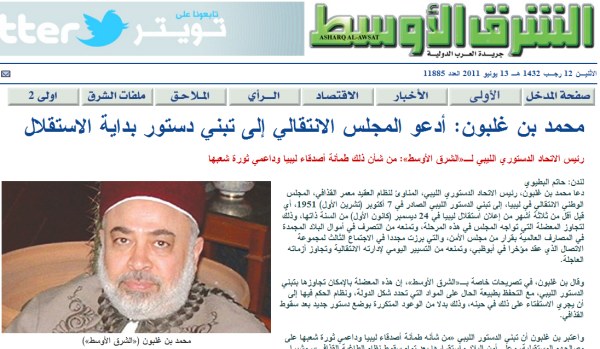
محمد بن غلبون: أدعو المجلس الانتقالي إلى تبني دستور
بداية الاستقلال
رئيس الاتحاد الدستوري الليبي
لـ«الشرق الأوسط»:
من شأن ذلك طمأنة أصدقاء ليبيا
وداعمي ثورة شعبها
الاثنين12
رجب 1432 الموافق 13 يونيو 2011
لندن: حاتم البطيوي
دعا محمد بن غلبون، رئيس الاتحاد الدستوري الليبي، المناوئ لنظام
العقيد معمر القذافي، المجلس الوطني الانتقالي في ليبيا، إلى تبني
الدستور الليبي الصادر في 7 أكتوبر (تشرين الأول) 1951، أي قبل أقل من
ثلاثة أشهر من إعلان استقلال ليبيا في 24 ديسمبر (كانون الأول) من
السنة ذاتها، وذلك لتجاوز المعضلة التي تواجه المجلس في هذه المرحلة،
وتمنعه من التصرف في أموال البلاد المجمدة في المصارف العالمية بقرار
من مجلس الأمن، والتي برزت مجددا في الاجتماع الثالث لمجموعة الاتصال
الذي عقد مؤخرا في أبوظبي، وتمنعه من التسيير اليومي لإدارته
الانتقالية وتجاوز أزماته العاجلة.
وقال بن غلبون، في تصريحات خاصة بـ«الشرق الأوسط»، إن هذه المعضلة
بالإمكان تجاوزها بتبني الدستور الليبي، مع التحفظ بطبيعة الحال على
المواد التي تحدد شكل الدولة، ونظام الحكم فيها إلى أن يجري الاستفتاء
على ذلك في حينه، وذلك بدلا من الوعود المتكررة بوضع دستور جديد بعد
سقوط القذافي.
واعتبر بن غلبون أن تبني الدستور الليبي «من شأنه طمأنة أصدقاء ليبيا
وداعمي ثورة شعبها على مصالحهم المستقبلية، وعلى أمن البلاد واستقرارها
بعد تمام سقوط نظام الطاغية القذافي»، مشيرا إلى أن أولئك الأصدقاء
والحلفاء عبر عن قلقهم تصريح وزير خارجية بريطانيا، ويليام هيغ، عقب
زيارته لبنغازي مطلع هذا الشهر، الذي أهاب فيه بالمجلس الوطني
الانتقالي بـ«تطوير انتقالهم المقترح للسلطة بشكل أكثر تفصيلا لضمان
وضع خطط شاملة» للحكم بعد التخلص من القذافي، وهو الأمر الذي يتعارض مع
صلاحيات المجلس بسبب كونه انتقاليا مؤقتا، وبسبب أن ما بعد القذافي
تقرره صناديق الاقتراع.
وأوضح بن غلبون أنه يعني بالدستور الليبي، ذلك الدستور الوحيد في تاريخ
البلاد، الذي وضعته جمعية تأسيسية مثلت قطاعات الشعب الليبي كلها،
ومناطق البلاد كافة تجاوبا مع شرط هيئة الأمم المتحدة للموافقة على منح
ليبيا استقلالها.
ووصف بن غلبون دستور 1951 بأنه «جاء في سابقة غير معهودة في منطقتنا
حيث وضعه ممثلون عن الشعب الليبي قبل تكوين الدولة وتنصيب الحاكم».
واعتبر بن غلبون أن اتخاذ المجلس الوطني الانتقالي لهذه الخطوة سيضعه
في موقف قانوني مناسب للمطالبة بكرسي ليبيا في هيئة الأمم المتحدة،
وبالتالي الحصول على الأحقية في التصرف في الأموال الليبية المجمدة في
المصارف العالمية، وبيع النفط الليبي والغاز، لتمويل الثورة والخروج
بالوطن من الورطة الاقتصادية التي بدأت تخنقه، بل ويضعه في موقف يمكنه
من مساءلة هيئة الأمم المتحدة لتمكينها القذافي من كرسي ليبيا بعد
إلغائه لدستور البلاد الذي كان أساسا لقبولها في الهيئة الدولية، موضحا
أن المجلس باتخاذه هذه الخطوة سيرسخ محليا ودوليا استحالة تعطيل
الدستور مرة أخرى على يد أي حاكم في المستقبل، وتلك سابقة عظيمة وغاية
قد لا تقل أهمية عن إسقاط نظام القذافي، يقول بن غلبون.
وفي معرض تعليقه على المطالبين بصياغة دستور جديد للبلاد، قال بن غلبون
إن كثيرا من الأصوات التي تعلو بإصرار للمطالبة بوضع دستور جديد للبلاد
بعد سقوط القذافي، ولا تعير دستور الشعب أي أهمية، تصدر إما من كوادر
نظام القذافي ما قبل 15 فبراير (شباط) الماضي والسائرين في ركبه،
وهؤلاء لا قيمة لدستور الشعب عندهم لجهلهم بالأهمية الفعلية لهذه
الوثيقة، والأبعاد الحقيقية لقيمتها كمصدر للشرعية القانونية المنشودة،
وإما ممن يرون أن الفرصة سانحة لتخليد أسمائهم في قائمة واضعي الدستور،
بالإضافة إلى قلة ممن يرغبون في مسح فترة ما بعد الاستقلال من التاريخ
الليبي بجميع آثارها لأسباب بعضها شخصي وبعضها جهوي.
ودعا بن غلبون الثوار إلى أن ينهوا هؤلاء وهؤلاء عن غيهم، ويهيبوا بهم
لتوظيف هذا المكسب الوطني الحضاري العظيم في استقرار البلاد وتجاوز هذه
المعضلة وحل الأزمة الاقتصادية الراهنة، وطمأنة الأصدقاء، ثم إجراء
التعديلات اللازمة لتطوير هذه الوثيقة لتتناسب مع متطلبات العصر
وتطلعات الشعب من خلال ما تكفله هذه الوثيقة ذاتها من آلية لتحقيق ذلك،
مشيرا إلى أنه سبق أن اختبر ذلك بنجاح في سنة 1963 عندما عدل الدستور
ليسمح بنقل البلاد من النظام الفيدرالي إلى نظام الدولة الموحدة. وذكر
بن غلبون أن دساتير الشعوب المتحضرة توضع مرة واحدة فقط، ثم تجرى عليها
التعديلات متى لزم الأمر لمواكبة مسيرتها الحضارية ومتغيرات الزمن
والظروف، معطيا المثل بوضع الدستور الأميركي سنة 1787، وهو أقدم دستور
مكتوب غير منقطع الاستعمال في العالم، الذي أجريت عليه التعديلات 27
مرة. وفي المقابل، قال بن غلبون إن إحدى الدول العربية العريقة دخلت في
دوامة تغيير الدساتير واستبدالها كلما تبدل الحاكم حتى بلغ عدد
دساتيرها منذ سنة 1925 سبعة دساتير. |
|
|
|
يمكن الاطلاع على نص
هذا التصريح في موقع الصحيفة باتباع هذه الوصلة |
|
http://www.aawsat.com/details.asp?section=4&article=626345&issueno=11885 |
|
|
|
تعليقات
القراء تحت الموضوع على موقع الصحيفة |
|
|
|
عبد الله محمد،
«المملكة المتحدة»، 13/06/2011
الدستور
قبل الدولة ؟ هذه حقاً سابقة تاريخية نادرة. منذ أن انزاح القذافي
عن شعب ليبيا ونحن نسمع ونرى أشياءً مذهلة
عن هذا الشعب. يبدو أن أبو التاريخ
هيرودوت الإغريقي لم يخطئ عندما قال عبارته المأثورة من ليبيا يأتي
الجديد.التحية
والإكبار لشعب ليبيا البطل وأطيب التمنيات بالنصر الكامل، لتحتفظوا
بدستوركم ووحدة ترابكم ولتستعيدوا مجدكم
القديم، والرحمة لعمر المختار
ولجميع الشهداء.
|
|
Ahmad Mukhtar،
«المملكة
العربية السعودية»، 13/06/2011
نشكر الأخ محمد بن غلبون على
مداخلته لأنها ستثري النقاش القائم بخصوص صياغة دستور جديد في
ليبيا. ولكنني
أختلف مع الأخ محمد بأن نتبنى دستور
الاستقلال كما هو، فأعتقد اننا يجب أن نرجع له ونأخذه في الحسبان
وأن نتذكر بأن
لجنة صياغة دستور الاستقلال لم تكون
منتخبة، ثم ان دستور الاستقلال كان لنظام ملكي وهو مرفوض من معظم
التيارات
السياسية في ليبيا ما عدا الاتحاد
الدستوري الذي يرأسه الأخ محمد.
يجب أن نصيغ دستور جديد ولو مؤقت
حتي تكتمل
الهياكل الديموقراطية ونستطيع
انتخاب لجنة لصياغة دستور دائم للبلاد.
نقطة أخيرة يجب أن يترفع الأخ محمد
عن اتهام
من يؤيد صياغة دستور جديد بأنه اما
من بقايا نظام القذافي أو يريدون تخليد أسمائهم أو لأسباب شخصية أو
جهوية
ويرتقي بالنقاش الى مستويات أعلى
ويحترم رأي الوطنيين الأحرار الذين يشاركون في صنع تاريخ ليبيا
الحديث.
|
|
عبدالله
المصراتي، «المملكة المتحدة»، 13/06/2011
لابد من حل سريع للأزمة المالية
الخانقة والا فترت همة الثوار وساءت حالة النازحين ومن ثم الفوضى
والمجاعة، وتبني
الدستور السابق حل سريع للأزمة
المالية ويخرج المجلس الوطني من دوامة الاختيارات والتجاذبات، وبعد
ذلك للشعب
تعديله او الغاؤه
|
|
توفيق منصور، «المملكة المتحدة»، 13/06/2011
استمرار دستور
الاستقلال أولى من دستور مؤقت، هناك فرق بين الدستور والدعوة
للملكية، المطلوب هو إعادة الاعتبار والعمل لدستور وليس عودة
الملكية، الدعوة لدستور جديد دعوة للاختلاف والتناحر.
|
|
د. أمين المغربي - بريطانيا، «المملكة
المتحدة»، 13/06/2011
لا يمكن للمواطن
الثقة بمن يمنحوا أنفسهم الحق في تجاوز دستور الوطن بدون تفويض من
الشعب كما فعل القذافي سنة 1969، فإلى أن يتم تحرير الوطن بالكامل
وتتاح الفرصة للمواطنين لأن يقولوا كلمتهم في شأن تطوير وتعديل
دستورهم الأصلي بما يحقق تطلعاتهم وطموحاتهم، أو استبداله بدستور
جديد يبدو هذا الاقتراح وجيهاً وعملياً للتحول من حالة الجمود التي
تعتري المشهد الليبي وتطمئن الحلفاء الذين قد تتحول نصائحهم إلى
إملاءات إن لم يتم استباق ذلك بمثل هذه الخطوة. أما ربط الدستور
بالنظام الملكي فهي حجة ضعيفة أثبت عدم صحتها رفع الشعب الليبي
الثائر لعلم الاستقلال بدون أن يعني ذلك مطالبتهم بالعودة إلى
النظام الملكي. كذلك فإن الاتحاد الدستوري الذي يترأسه صاحب هذا
التصريح لم يدع في أي وقت من الأوقات إلى العودة إلى النظام الملكي
ولا نادى بمبايعة أحد بعد وفاة الملك ادريس رحمه الله الذي كان
الحاكم الشرعي لليبيا بموجب الدستور الذي ألغاه القذافي بانقلاب
عسكري فاقد لأي شرعية.
|
|
|
|
|
|
|
|
|
عودة إلى أعلى الصفحة |
|
|
|
|
|
|
|
Monday 13th June 2011 |
|
Mohammed
Ben Ghalbon:
I call upon the Transitional Council to adopt
the Constitution of the Independence Era.
The Chairman of
the Libyan Constitutional Union tells “Asharq Al-Awsat”: This
would reassure the Libyan people’s friends and supporters of their
uprising.
(Translation from Arabic)
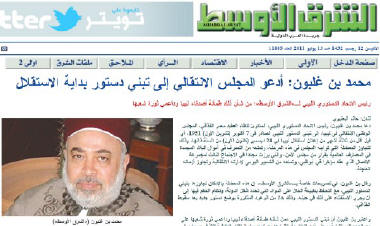
Mohammed Ben
Ghalbon, chairman of the Libyan Constitutional Union, a body
opposing Colonel Muammar Gaddafi’s regime, called upon the Libyan
National Transitional Council (NTC) to adopt the constitution
promulgated on 7th October 1951, less than three months
before the declaration of Libya’s Independence on 24th
December 1951. This would overcome the
perplexities
facing the
Council at this stage, which are preventing them from accessing the
country’s funds frozen in the international banking systems as a
result of a Security Council resolution. This problem has re-emerged
in the third meeting of the contact group, recently held in Abu
Dhabi and is hindering the NTC’s daily management of its
transitional administration and the current urgent crisis.
Ben Ghalbon
exclusively told “Asharq Al-Awsat” : “Rather than repeatedly
promising to draft a new constitution after Gaddafi falls, this
problem can be overcome by adopting the Libyan constitution,
naturally with reservations concerning the articles that determine
the form of the state and the system of government until a
referendum on these issues is conducted at the appropriate time.
Ben Ghalbon
considers the adoption of the Libyan Constitution would reassure
Libya’s friends and supporters of its people’s revolution, about
their future interests and the country’s security and stability
after the ultimate demise of the Gaddafi’s regime; these fears and
concerns were articulated in a statement by British Foreign
Secretary William Hague after his visit to Benghazi at the beginning
of the month when he urged the NTC “... to develop their proposed
transition of authority in more detail in order to arrive at
comprehensive plans” after getting rid of Gaddafi. However this
conflicts with the NTC’s powers, which by nature are temporary and
transitional and also as the post Gaddafi era should be decided at
the ballot box.
Ben Ghalbon also
pointed out that the Libyan Constitution he refers to is the only
constitution in the nation’s history which was established by the
Constituent Assembly which represented all sectors and regions of
Libya in accordance with the conditions stipulated by the United
Nations in order to grant Libya its independence.
Ben Ghalbon
described the 1951 Constitution as “...a unique precedent in our
region as it was established by representatives of the Libyan people
before the creation of the state and the inauguration of the ruler.”
Ben Ghalbon considers that by
taking this step the NTC would be in a legal position to reclaim
Libya’s seat at the United Nations and thus obtain eligibility to
access Libyan assets including those frozen in the international
banking system as well as revenue from the sale of Libyan oil and
gas to finance the revolution and thus take the country out of the
economic quagmire which is starting to stifle it. Moreover, this
would empower the NTC to take the UN to task for surrendering to
Gaddafi Libya’s seat in the UN after having annulled the
constitution which was the prerequisite for accepting Libya as a
member of the international body in the first place. He went on to
explain that by adopting the Libyan Constitution, the NTC would make
it impossible, domestically and internationally for any ruler to
suspend the Constitution again which would in itself be a great
precedent and a goal no less important than achieving the fall of
the Gaddafi regime.
In commenting on those calling
for the drafting of a new constitution, Ben Ghalbon said that many
of the loud voices insistently calling for a new constitution for
post Gaddafi Libya with a total disregard for the nations
constitution fall into three categories: either cadres of the old
regime to whom the people’s constitution holds no value due to their
ignorance of its true worth and its actual importance as a source of
the nations essential legal legitimacy. Or those who see in the
drafting of a new constitution an opportunity to perpetuate their
names in Libya’s history as authors of the nation’s constitution.
And finally a minority who wish to erase the entire
post-independence era from Libyan history; some being prompted by
regionalistic inclinations and others by purely personal motives.
Ben Ghalbon
called upon the revolutionaries to admonish all these groups and put
an end to this aberration. Furthermore he called on them to utilise
this great national and civilised achievement to establish stability
in the country, deal with the current economic crisis and reassure
international friends and then make the necessary amendments to
evolve this document to meet the demands of the current age and
future aspirations of the people by using the mechanism already
provided with it. He pointed out that this was tested successfully
in 1963 when the constitution was amended to allow for the
transformation of the country from a federal state system to the
unitary one.
Ben Ghalbon also
noted that the constitutions of civilised nations were drafted only
once and then subsequently amended whenever needed to suit the
nation’s natural development, the current age and circumstances. He
cited the American Constitution which was drafted in 1787 and has
been valid ever since making it the oldest unbroken constitution in
the world. The American constitution has been amended 27 times in
contrast to a prominent Arab country which has been locked in a
vicious circle of changing and replacing the constitution every time
a new ruler takes power which has resulted in it having had 7
constitutions since 1925. |
|
|
|
This article was originally published
in Arabic, in the London daily "Asharq Al-Awsat on 13the June 2011.
It can be viewed by following this link: |
|
http://www.aawsat.com/details.asp?section=4&article=626345&issueno=11885 |
|
|
|
|
|
|
|
|
|

|
|
(العدد 67 :
الخميس 5 يوليو 2012) |
|
بسم الله الرحمن الرحيم
سيادة المستشار مصطفى عبد الجليل الموقر
[1]
تحية طيبة وبعد
عندما واجهتك مذيعة التلفزيون البريطاني "بي بي سي/العربي" بتاريخ 12
مايو 2011 أثناء زيارتك لبريطانيا بمخاوفي المعلنة قبل يوم واحد من تلك
المقابلة في إحدى جرائد لندن العربية من احتمالات نشوب حروب أهلية في
ليبيا، ونصائحي بأخذ الاحتياطات اللازمة لمنعها، أبديت نفوراً من
الرغبة في الخوض في الموضوع، وأظهرت الامتعاض، واعتبرت الموضوع برمّته
رأي شخصي لا يستحق النقاش أو التعليق عليه.
وقد منعني ردّ فعلك ذلك من تكرار النصح وامتنعت عن الخوض في الشأن
الوطني الذي كنت متفرغاً له علناً وبصراحة ووضوح منذ بداية الثمانينيات
من القرن الماضي، وذلك لما عرفته من عدم جدوى توجيه النصح إليك، وأنك
تشكّ في من يأتيك بجديد لم يكن في حسبانك ولا بلغ إليه فهمك وإدراكك.
وامتنعت كذلك حتى لا يكون لي أي دور من قريب أو بعيد في الكارثة التي
رأيت بوضوح ومنذ البداية أن قصور المجلس الانتقالي يسعى بالوطن نحوها.
وهنا سيدي الفاضل أؤكد لك بأنني لم ولن أحاول التذاكي عليك ولا مشاركتك
الحكم بأي شكل من الأشكال، أو في أية جزئية كانت. ولو صفّيت النيّة
وتجاوزت عن خشونة لهجتي التي فرضها احترامي لك، فجنّبتك ونفسي زخرف
القول الذي يضيع المعنى والذي يخاطب به أصحاب الأمراض النفسية
المتفانين في حب ذواتهم فتنهار الحقيقة ومن ورائها الوطن، وعند ذلك
سترى أن خطابي هذا نابع من حب الوطن والحرص على مصلحته، والغيرة على
دماء شعبه، وتدعمه خبرة عقود عديدة في هذا الخصوص.
إن المصادمات المسلحة الدامية في عدّة بقاع من ليبيا، والحشود الغاضبة
في الوادي الأحمر تجعل استماعك الآن للحديث عن الحرب الأهلية أحسن من
استماعك له في شهر مايو 2011. وهو الأمر الذي يشجعني على القول إن طول
زمن الفراغ السياسي الذي نجم عن سقوط الطاغية نكأ جراحاً قديمة، كما
شجع الطامعين في مكاسب غير مشروعة، وأغرى موتورين بأخذ ثأرهم بأيديهم،
وأعاد إلى أرض الحاضر ذكرى "خط الغرب وخط الشرق". ولن تعيد الأمور إلى
نصابها الانتخابات الموعودة، ولا تعديل عدد المقاعد ولا لجنة صياغة
الدستور الجديد، بل سيطيل ذلك من زمن الفراغ فيتسع الخرق على الراتق،
وتكون أنت المسؤول الأوحد، فقد أعلن أعضاء مجلسك الانتقالي أكثر من مرة
أنك لا تشركهم في قراراتك.
يا شيخ مصطفى؛ إن من وسوسوا لك بأن تبنيّ دستور الاستقلال يعدّ تكريساً
للنظام الملكي قد سبق لهم وأن عارضوا فكرتنا الدستورية بشدّة في
ثمانينيات وتسعينات القرن الماضي. وهم يعتقدون أن الاستفادة منها الآن
سيدمغهم بالخطأ وسوء الفهم والقصور.
أما من تشير إليهم أحياناً في خطابك بأنهم "حلفائنا" وتعتقد في اخلاصهم
وصدقهم فإنهم سبق لهم وأن عارضوا هذه الفكرة وعملوا جاهدين على وأدها،
لأنهم يعرفون جيدا أنها ستنقذ الوطن من براثنهم وستكبح جشع الطامعين،
وتملأ الفراغ بسرعة كافية لوضع الثورة في مسار صحيح يجنب الوطن الكوارث
المحدقة ويحافظ على دماء الشعب التي يريدون لها أن تسفك انتقاماً لما
حلّ بيهود ليبيا سنة 1967. وقد سبق لي وأن وثقت لذلك تحت عنوان "أوراق
مرحلة"
[2]
تجده في موقع أرشيف الاتحاد الدستوري الليبي. كما ستجد تتمة الموضوع
على نفس الموقع تحت عنوان " المنظمات الصهيونية تسعى لحكم ليبيا بعد
سقوط القذافي"
[3].
لقد سبق للمجلس الانتقالي أن تجاوز صلاحياته وأقدم على سابقة تبدو في
ظاهرالأمر وكأنها ارتجالية عندما فرضوا ما يسمى بـ "الاعلان الدستوري "
في 3 أغسطس 2011 ، وأنا أعرف أنها من نصائح "حلفائك" كأول خطوة
لابتعادك بالشعب الليبي عن دستوره الموروث باهظ الثمن، تتبعها خطوة وضع
دستور جديد بمساعدة أولئك الذين كانوا يكتبون دستوراً جديداً لسيف
القذافي، لقطع الطريق على الليبيين باتجاه مكسبهم الحضاري المتجذّر
ومركبتهم الأمنة إلى المستقبل (دستور 51).
وهنا أناشدك بحب الوطن أن تكرر هذه السابقة وتتبنّى دستور الاستقلال
(دستور 1951)، مع التحفظ على بنوده المتعلقة بشكل الدولة ونظام الحكم
واحالتها للإستفتاء في المستقبل المستقر، إن شاء الله، لملء الفراغ في
المرحلة الانتقالية التي طالت، وأن تفعّل القوانين القديمة المنبثقة من
ذلك الدستور، وأن تكوّن لجاناً تستعجل تطويرها إلى أن يعاد النظر فيها
برويّة في وقت الأمن والاستقرار. ولا تخش من "حلفائك" ، فلديك أبطال
ينازعون الأسُدُ على أشلائها.
إن ثوار فبراير انتزعوا إكبار وإعجاب شعوب العالم الحرّ كافّة، ولن
يستطيع سياسيوهم أن يجهروا لك بالعداء أو المخالفة وهذا واقع إن أدركته
وأحسنت استخدامه فإنك ستجلس على طاولة أية مفاوضات لتملي شروطك
الليبية، لا أن تستمع إلى "النصح" و "التوجيه".
توجه بسرعة بهؤلاء الأسود إلى الأمام ، إلى مستقبل باهر عبر الدستور
الليبي (1951) ولا تتركهم في فراغ سينتهي بهم إلى توجيه فوّهات بنادقهم
إلى صدور بعضهم البعض.
ومن أجل ليبيا - ليس إلاّ- أدعو أن تكون ممن يستمعون القول فيتبعون
أحسنه.
والسلام عليكم ورحمة الله وبركاته
محمد بن غلبـون
رئيس الاتحاد الدستوري الليبي
chairman@libyanconstitutionalunion.org
10 شعبان 1433 الموافق 1 يوليو 2012
1)
نشرت في صحيفة "برنيق نيوز" ، عدد رقم 67، الصادر يوم الخميس 5 يوليو
2012
2)
http://www.libyanconstitutionalunion.org/docuartcls.htm#3
3)
http://www.libyanconstitutionalunion.org/hyatrtcl.htm
4)
نشرت مقتطفات منها كخبر في صحيفة الشرق الأوسط (العدد رقم 12270)
الصادر في 2 يوليو 2012
http://www.aawsat.com/details.asp?section=4&issueno=12270&article=684541&feature=
|
مواضيع ذات صلة:
|
|
القذافي والدستور المعطّل
عودة إلى أعلى الصفحة |
|
|
|
|
|
|
|
Open Letter to Mustafa Abduljalil
*
Translation from Arabic
Respected Councillor, Mustafa Abduljalil
Greetings,
I refer
you back to your interview with the BBC Arabic Service Television
Station on 12 May 2011, during your visit to Britain, when the
interviewer challenged you with my fears of the likelihood of the
outbreak of civil wars in Libya and my advice to take the necessary
precautions to prevent them, which I outlined one day ahead of this
interview in one of the Arabic newspapers published in London. Your
response was characterised by aversion and disinclination to deal
with the subject. You considered the whole matter a mere personal
opinion deserving neither discussion nor comment.
This
reaction of yours prevented me from offering my advice to you again.
I also abstained from going any further into the main national
affairs and concerns to which I had been dedicated full-time, in an
open, frank and clear manner since the early 1980’s. I did so
because I realised that it was futile to advise you, as it became
apparent that you are suspicious of anybody who comes up with
something new to you, which you neither suppose, nor understand and
which is beyond your awareness. I abstained also so that I have no
part, big or small, in the disaster that the NTC was leading the
country towards, due to its incompetence, which was clear to me
since the very beginning.
At this
stage dear sir, I assure you that neither have I tried nor will I
try to pretend to be clever with you. Nor am I interested in power
or trying to share power with you in any shape or form whatsoever or
at any level. Moreover, if you read this message in good faith and
pardon my harsh tone, which I reverted to out of respect to you and
to myself. I have avoided addressing you with sweet and pleasing to
hear words that result in losing the intended meaning and lead to
the collapse of the truth and consequently the welfare of the
homeland Libya. That tone is often utilized to address despots and
those people who are totally absorbed in their narcissism. If you
do so, you will know that my way of addressing the issue and the
content of my address is supported by decades of experience and is
motivated solely by my love for my homeland and the care and concern
for its interests and wellbeing and that of its people.
O Sheikh Mustafa, the people who whispered to you that the adoption
of the Independence Constitution was but a consecration for the
monarchy, are the same people who had vehemently opposed our stance
for the constitution in the eighties and the nineties of the last
century. They fear that benefiting from that idea now would expose
their ignorance, misjudgement and ineptitude.
On the other hand, those who you sometimes refer to in your
discourse as “our allies” and believe in their devotion and
sincerity, have already opposed this idea and worked hard to bury it
from its inception for they know only too well that it will rescue
the country from their grasp, Reign in the greedy , promptly fill
the vacuum and put the revolution on the right path that would save
the homeland from the imminent disasters and preserve the blood of
the Libyan people they want to shed in revenge of what happened to
the Jews of Libya in 1967. I have previously documented this under
the title “Papers of a Phase – a brief summary of my contacts with
US Officials”1,
which is posted on the archive web site of the “Libyan
Constitutional Union”. You will also find the sequel topic on the
same site under the heading "Zionist organizations seeking to rule
Libya after the fall of Gaddafi 2."
The NTC exceeded its powers and created a precedent when they
proclaimed the so called “Constitutional Declaration” on 3 August
2011 . It appeared as if it was an arbitrary action. I know that it
was on the advice of “your allies” as a first step of your keeping
the Libyan people away from their inherited and precious
Constitution. This step will be followed by the step of writing a
new constitution with the help of those who were writing a new
constitution for Seif Gaddafi to block the path of the Libyan people
towards their deep rooted civilised gain and their safe vehicle to
the future (the 1951 Constitution).
I hereby appeal to you in the name of patriotism to repeat this
precedent and adopt the Independence Constitution (1951) with
reservations to be made on its articles concerning the form of the
state and the system of government which should be put to a
referendum during future stability, to fill the vacuum of the
transitional period which has gone on too long. Then activate the
old laws derived from that Constitution, and form committees to
urgently develop these laws until such time that they can be
prudently appraised in times of stability and certainty. Have no
fear from “your allies” for you have heroes ready to
‘fight lions over their kill’.
The February revolutionaries captured the admiration and esteem of
the peoples of the entire free world. Their politicians could not
afford to be seen to oppose you or show hostility towards you. If
only you were aware of this fact, and knew how to make good use of
it, you would dictate Libyan terms on any negotiation table, not to
sit to listen to “advice” and “guidance”.
Go forward with those lions towards a prosperous future via the
Libyan Constitution (1951). Do not leave them in a vacuum which will
lead them to direct their guns at one another.
For the sake of Libya –and nothing else- I pray that you are of
those who “hear
advice and follow the best thereof”.
Mohamed Ben Ghalbon
Chairman
Libyan Constitutional Union
chairman@libyanconstitutionalunion.org
1 July 2012
*
Edited extracts of the letter was published in the London daily
“Asharq Alawsat on Monday 2nd July 2012 and the full text
was published in Benghazi’s “Brnieq” newspaper on Thursday 5th
July 2012 (Issue No. 67).
1)
http://www.libyanconstitutionalunion.org/hyatrtcl.htm#eng
2)
http://www.libyanconstitutionalunion.org/libjews.htm#lzn
|
Relevant Reading:
|
|
Gaddafi and the Abandoned Constitution |
|
|
|
|
|
|
|
|
|
|
|
محمد بن غلبون رئيس حزب الاتحاد الدستوري الليبي:
حرب أهلية تصرّ أجهزة استخبارات غربية على إشعالها
تصريح لمجلة المجلة
بتاريخ 20 يولية 2012، نشر ضمن تقرير مطول في 13 سبتمبر 2012 تحت
عنوان:
"أين
ينتهي الكابوس ومتى يبدأ الحلم؟"
بقلم :
جمعة بوكليب
http://www.majalla.com/arb/2012/09/article55238339

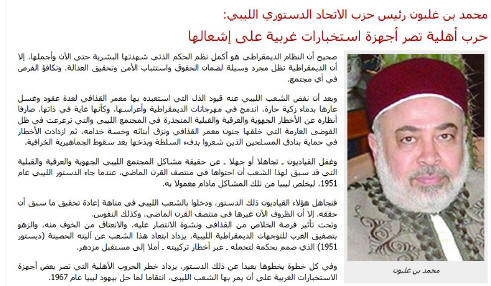
"صحيح
أن النظام الديمقراطي هو أكمل نظم الحكم الذتي شهدتها البشرية حتى الآن
وأجملها، إلا أن الديمقراطية تظل مجرد وسيلة لضمان الحقوق واستتباب
الأمن وتحقيق العدالة، وتكافؤ الفرص في أي مجتمع.
وبعد أن نفض الشعب الليبي عنه قيود الذل التي استعبده بها معمر القذافي
لعدة عقود وغسل عارها بدماء زكية حارة، اندمج في مهرجانات الديمقراطية
وأعراسها، وكأنها غاية في ذاتها، صارفا أنظاره عن الأخطار الجهوية
والعرقية والقبلية المتجذرة في المجتمع الليبي والتي ترعرعت في ظل
الفوضى العارمة التي خلقها جنون معمر القذافي ونزق أبنائه وخسة خدامه،
ثم ازدادت الأخطار في حماية بنادق المسلحين الذين شعروا بدفء السلطة
وبذخها بعد سقوط الجماهيرية الخرافية.
وغفل القياديون ـ تجاهلا أو جهلا ـ عن حقيقة مشاكل المجتمع الليبي
الجهوية والعرقية والقبلية التي قد سبق لهذا الشعب أن احتواها في منتصف
القرن الماضي، عندما جاء الدستور الليبي عام 1951، ليخلص ليبيا من تلك
المشاكل مادام معمولا به.
فتجاهل هؤلاء القياديون ذلك الدستور،
ودخلوا بالشعب الليبي في متاهة إعادة تحقيق ما سبق أن
حققه.
إلا أن الظروف الآن غيرها في منتصف القرن الماضي، وكذلك النفوس.
وتحت تأثير فرحة الخلاص من القذافي ونشوة الانتصار عليه، والانعتاق من
الخوف منه، والزهو بتصفيق الغرب للتوجهات الديمقراطية الليبية، يزداد
ابتعاد هذا الشعب عن آليته الحصينة (ديستور 1951) الذي صمم بحكمة
لتحمله ـ عبر أخطار تركيبته ـ أمناً إلى مستقبل مزدهر.
وفي كل خطوة يخطوها بعيدا عن ذلك الدستور، يزداد خطر الحروب الأهلية
التي تصر بعض أجهزة الاستخبارات الغربية على أن يمر بها الشعب الليبي،
انتقاما لما حل بيهود ليبيا عام 1967." |
|
للإطلاع على التقرير كاملا في موقع مجلة المجلة اتبع
هذه الوصلة: |
|
www.majalla.com/arb/2012/09/article55238339 |
|
عودة إلى أعلى الصفحة |
|
|
|
|
|
|
|
|
|
Certain Western
Intelligence Agencies are adamant to ignite a Civil War in Libya

http://www.majalla.com/arb/2012/09/article55238339
A translation
from Arabic of a press statement by the LCU Chairman Mohamed Ben
Ghalbon to the London weekly magazine
“Al-Majalla” dated 20 July 2012, which was published on 13 Sept
2012 within a long report by Jumma Boklib
titled:
“When
would the nightmare end and the dream begin?”
***
*****
***
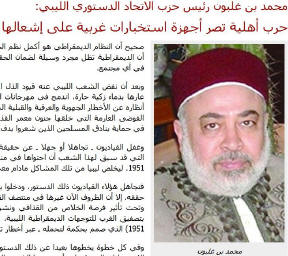
While it is
true that the democratic system is the most ideal system of
governance known to man, Democracy, however, is merely a means to
secure rights and establish security, stability, justice and equal
opportunities in any given society.
Now that the
Libyan people have shaken-off Gaddafi’s cuffs of humiliation with
which he enslaved them for many decades, and cleansed themselves of
that disgrace with precious blood, they indulged in the festivals of
democracy as if it was an end in its self. They looked away from the
regional, tribal and ethnic evils which are entrenched in the fibre
of the Libyan society and which had thrived in the shadows of the
chaos created by Gaddafi’s insanity and his eccentric children, and
the baseness of his cronies. Those evils were nourished further in
the protection of the armed militias who are enjoying the luxury of
power following the collapse of Gaddafi’s mythical state.
The new
leaders ignored –either deliberately or out of sheer ignorance- the
Libyan society’s fundamental regional, ethnic and tribal
vulnerabilities, which the Libyan people were able to overcome in
the middle of the last century when the 1951 constitution was
introduced and implemented. The new leaders have forsaken that
constitution and entered the Libyan people into a labyrinth to
achieve what had already been accomplished. However, present
circumstances are not the same as those of the middle of the last
century, nor are the spirits of the people.
Under the
influence of the ecstasy of salvation from Gaddafi, the jubilation
of liberation from his terror, the euphoria of victory and the pride
from the west’s accolades for the democratic trends in Libya, the
Libyan people are rapidly departing from their safety mechanism (the
1951 constitution), which was prudently designed to carry them in
spite of all the dangerous minefields within the composition of
Libyan society- safely towards a prosperous future. And with every
step they take away from the constitution increases the threat of
the civil war that certain western intelligence agencies are
adamant the Libyan people go through in revenge for what befell the
Jews of Libya in 1967.
|
|
|
|
|
|
|
|
|
|
بسم الله الرحمن الرحيم
خطاب مفتوح إلى خليفة حفتر
من محمد بن غلبون رئيس الاتحاد الدستوري الليبي
29 صفر
1436 - 21 ديسمبر 2014
إن الذي مكّن السيسي من انقاذ مصر من مخطط ضياعها في دوامة السياسة ذات
المسوح الدينية بعد أن استُهلك وهم السياسة القومية هو عراقة المؤسسة
العسكرية المصرية وكفاءة جيشها وانضباطه وسيطرته على كل الأراضي
المصرية، بالإضافة إلى قوة البنية التحتية للدولة ... وليست رتبته
العسكرية ... على علوّها.
لذلك فإن ترقيتك إلى أعلى رتبة عسكرية ليبية لن يخولك الاستقلال ببرقة
في شبه انقلاب عسكري بحجة إنقاذ ما يمكن إنقاذه من الوطن ... فلا خبرتك
العسكرية ولا السياسية تمكنّك من فهم مايجري حولك ولا استيعاب الواقع
الذي تخوضه فضلاً عن استشراف مخاطر المستقبل.
إن الذين يخططون لك الانقلاب ويشجعونك عليه سيعترفون بانقلابك بمجرد
الإعلان عنه ولكنهم لن يساعدوك - كما يعِدونك الآن – على تأمين برقة،
فهم لم يدفعوا بالجماعات المتطرفة من مالي والجزائر والنيجر وغيرها
ليعسكروا في برقة مدججين بالأسلاب من ترسانة القذافي إلا ليكونوا شوكة
في جنب الجيش المصري تستنزفه على الحدود الليبية المصرية عشرات السنين
بعيداً عن خط المواجهة مع اسرائيل ... ولن يسمحوا لك بالسيطرة عليهم،
حتى إن كان ذلك ممكناً.
خليفة أفندي:
اربأ بنفسك أن تكون معول الهدم الذي يقوّض الوحدة الليبية واكتفِ بهذا
الدور الدفاعي المهم الذي خوّلك إياه ماتبقّى من الجيش الليبي، ولا
تتبع أطماعك التي تؤججها وعود بعض القبليين في المنطقة، والتي يفيضونها
عليك بعد أن خاب أملهم في أحمد الزبير من قبلك، فإن هذه الوعود –على
صدقها واخلاصها ساعة التعهد بها – لن تفيدك وقت الحاجة إلا كما أفادت
الملك ادريس (رحمه الله) سنة 69، ومعمر القذافي عام 2011 .
فإنه على نُبل هذه القبائل ونخوتها إلا أن التنظيم القبلي وللأسف لم
يتطور مع الدول المدنية والجيوش السريعة الحركة، لذلك فإنهم لن
يستطيعوا الوفاء بالتزاماتهم في مقابل الميليشيات المسلحة -المدعومة من
قبل الأجهزة الاستخباراتية المتطورة- التي تعيث فساداً
في غرب البلاد وشرقها وجنوبها لتدفعها نحو التقسيم.
تحذيرات/خطابات مماثلة:
برقية مفتوحة لمعمر القذافي
(القدس العربي : 28
فبراير 2011
خطاب مفتوح لمصطفى عبدالجليل (صحيفة برنيق : 5
يوليو 2012 )
|
|
نشر في موقع
"ليبيا
المستقبل" بتاريخ 21 ديسمبر 2014 |
|
عودة إلى أعلى الصفحة |
|
|
|
|
|
|
|
|
|
|
|
تحذيرات ضد خطر الحروب القبلية
والتقسيم |
|
|
|
سياسات القذافي وضعت الليبيين أمام خطر
الحرب
الأهلية
[الشرق الأوسط يوليو 1992] |
|
|
|
من يطوق النزاعات الأهلية في ليبيا إذا ما نشبت
واستفحلت
؟
[الحيــــاة : 3 أغسطس 1994] |
|
|
|
حماية الوحدة الليبية مسؤولية وطنية
ومغاربية
[الشرق
الأوسط
26 يناير 1993]
|
|
|
|
رئيس الاتحاد الدستوري الليبي يحذر
من
«خطط» لتقسيم ليبيا
[الشرق
الأوسط 25 مارس 2011] |
|
|
|
شرف تطهير الغرب الليبي من القذافي هو حق
لقبائله
[الحيــــاة : 11 مايو 2011] |
|
|
|
حرب أهلية تصرّ أجهزة استخبارات غربية على إشعالها
[المجلة
20 يوليو 2012 ] |
|
|
|
رسالة رئيس الاتحاد الدستوري إلى المستشار مصطفى عبد الجليل
[برنيق
الخميس 5 يوليو
2012] |
|
|
|
برقية مفتوحة لمعمر القذافي
[القدس
العربي : 28 فبراير 2011 ] |
|
|
|
استِشراف
[ليبيا
المستقبل : 28 ديسمبر 2014] |
|
|
|
|
|
|
|
|
|
|
|
Open Letter to
Khalifa Hafter
From
Mohamed Ben Ghalbon
Chairman of the Libyan Constitutional Union
Translation from
Arabic
21 December 2014
What enabled Sisi to save Egypt from the scheme
of being driven into the vortex of politics veiled in the cloak of
religion, after the collapse of the illusion of Pan Arabism, was the
rootage of the Egyptian Military Institution and the efficiency and
discipline of its army. As well as the fact that it has full control
over the entire country, in addition to the strong infra structure
of the state. It was not his military rank, high as it is. Hence,
your promotion to the highest Libyan military rank would not entitle
you to an independent Cyrenaica in a disguised coup under the
pretext of “salvaging what can be salvaged” of the beleaguered
country. For neither your military or political experience enable
you to comprehend what goes on around you, nor fully grasp the
reality of what you are meddling in, let alone foresee future
dangers.
Those who are plotting and encouraging your
coup will be the first to recognise it but will never aid you –as
they are promising you now- to secure Cyrenaica. For they only
pushed the radical groups from Mali, Niger, Algeria and others to
camp in Cyrenaica armed to their teeth with weapons looted from
Gaddafi’s arsenals to become a thorn in the side of the Egyptian
army to exhaust it along the Egyptian-Libyan vast frontier for many
decades away from the front line with Israel. They would not allow
you to dominate them even if that was possible.
Khalifa Effindi
Spare yourself from the dishonour of becoming
the demolition tool that undermines the Libyan Unity and content
yourself with this vital defensive role which the remnant of the
Libyan army empowered you to conduct. And do not follow your
ambitions which are fanned by assurances of some tribal elements in
the area who were so disappointed in Ahmed Zubair before you. For
these assurances –true and sincere when made- will only benefit you
at the hour of need as they did King Idris in 1969 and Moammar
Gaddafi in 2011. For in-spite of the nobility and chivalry of those
tribes, the tribal system failed to develop with the civil state and
the fast mobility of modern armies. Therefore, they will not be able
to meet their obligations to you in the face of the armed militias
-supported by sophisticated intelligence services- which are
wreaking havoc in the west, east and south of the country to push it
towards divisions.
Similar previous warnings:
Open telegram to Moammar Gaddafi (Al-Quds Alarabi newspaper 28th Feb
2011)
Open letter to Mustafa Abdeljalil (Barniq newspaper 5th july 2011)
|
|
|
|
|
|
|
|
|
|
|
|
استِشراف
هاأنذا أعود إلى أهم نقطة في كتابتي السابقة
*
لأكرر أن الدفع بالجماعات المتطرفة من الجزائر ومالي والنيجر إلى برقة
ليس الغرض منه إنهائهم فيها، ولا إعانة أي حليف ليقوم بذلك، بل
لتمكينهم بكل السبل من دمار برقة ليعشّشوا بين أنقاضها ويستقطبوا
أمثالهم من أطراف العالم، ومنها تُنظّم وتُعان اختراقاتهم للحدود مع
مصر لزعزعة أمنها واستقرارها مما سيضطر الجيش المصري للإنتشار على تلك
الحدود الواسعة –بعيداً عن اسرائيل- لمنعهم وحماية بلاده، ومساعدة
القوات البرقاوية على ملاحقة الإرهابيين ومقاومتهم ... ثم سيتطور ذلك
التعاون إلى "اضطرار" كتائب من الجيش المصري إلى مطاردة الإرهابيين
داخل برقة ومنعهم من إقامة مايسمونه إمارتهم وكفّ بغيهم عن المواطنين -
الذين ثبت عجزهم عن حسم المواجهات المسلحة معهم- وعندها سيصفق الجميع
-قبائل ومدناً- للقوات المخلّصة من مصر الشقيقة ، والتي سيأتي معها
وبعدها سيل من القبائل البرقاوية التي تم تهجيرها في القرون السابقة
إلى مصر والتي يصل تعدادها الآن إلى عشرات الملايين من قبائل "أولاد
علي" و "جوازي" و "فوايد" وغيرها يحلمون بالعودة ، ولم ينقطع أملهم
فيها ، ولا يستطيع أي عاقل أو منصف لومهم أو تجريمهم على هذه المشاعر
والطموحات.
فهل أنتم راغبون في قدوم تلك الملايين المتحفزة لذلك ولا مانع لديكم من
مجاورتهم ومشاركتهم لكم في الوطن ؟
فإن كان الأمر كذلك فخذوا زمام المبادرة وأرسلوا وفودكم تدعوهم لبلادكم
حتى تكون عودتهم مَكرمة و بجميلكم وليس رغماً عنكم.
و إن كان العكس هو الصحيح فعليكم بأخذ الاحتياطات والإجراءات اللازمة
والفورية بداية من إدراك هذه الاحتمالات واستيعابها
والتفكير فيها جيدا وبعمق وجدية وتقليبها من جميع نواحيها فإن الحكومة
المصرية حتى إن لم يكن لديها أي مخطط الآن لهذه العودة فإنها بلا شك لن
تفوت الفرصة متى وجدت نفسها صاحبة الفضل عليكم وأصبحت قواتها داخل
أراضيكم برضاكم ... فإن توطين عشرات الملايين من المواطنين المصريين في
برقة سيخفف أزمات كثيرة عن مصر ليس هنا مجال حصرها أو استعراضها ...
ولا يلزمنا الخوض في البديهيات.
سيقول بعضهم انني واهم ... وانني أنظر إلى المستقبل بمنظار أسود -وقد
قال بعضهم من قبل أكثر من ذلك- ولكن ارجعوا إلى تنبيهاتي وتحذيراتي
السابقة منذ 1992**
لتروا كيف أن ما نبهت إليه من مخاطر قد تحقق بالفعل وأنه
كان من الأحكم أخذ الاحتياطات الواجبة لمنعه والتي لم تكن مستحيلة.
فـاقرأوا ما أكتب لكم بعين حب الوطن والحرص على مصلحته ... لأنه من هذا
المنبع جاءكم ... وابتعدوا –ولو أثناء لحظات القراءة- عن الجهوية
والقبلية والعصبية بأنواعها، واتركوا الاستخفاف والتهوين والتخوين
والحساسية المفرطة إلى مابعد دراسة المصلحة الوطنية.
إن الوحدة الوطنية هي درعكم ضد هذا المصير. فإن برقة -منفردة- سوف تكون
دويلة جديدة غير معترف بها بعد من هيئة الأمم المتحدة ، وغير مرسّمة
حدودها، وستكون في طور المخاض والتردد والتشكل وعندها يكون كل شئ
جائزاً وممكناً لكل لاعب دولي أو إقليمي وسيسهُل فرضه كأمر واقع !
أما ليبيا ذات الحدود المرسّمة والسيادة المعترف بها دولياً، والهوية
الواضحة فسيصعب على الغير فرض أي واقع جديد عليها وسيجرّم من يحاول ذلك
طبقا للقوانين والأعراف السائدة في العالم اليوم.
وفي حالة التفريط في الوحدة الوطنية واختيار التشرذم فإن طرابلس
(الإقليم) لن يكون أحسن حالاً من برقة .. فإن تاريخه -غير البعيد- كان
ممزقاً بالحروب الأهلية اللا متناهية التي تقسّم بسببها إلى عدة
معسكرات متقاتلة تكونت من تحالفات قبلية كانت تسمّى صفوفاً، أشهرها
"الصف اللوطي" (أو "صف البحر") الذي يتكون من قبائل مصراتة وزليطن
والخمس والعبادلة والفرجان والحسون ومعدان والمقارحة، و"الصف الفوقي"
(أو "صف البر") المكون من قبائل أولاد سليمان والقذاذفة وورفلة
والحطمان وودان وهون، و"صف القبائل" المكون من أولاد بوسيف والمشاشية
وجادو وفساطو، وصف الزنتان والرجبان والمحاميد، و"صف شداد" الذي يضم
العلالقة والبلاعزة والنوايل، و"صف يوسف" الشامل لقبائل ورشفانة
والعجيلات ....
فقد كانت الحروب والغزوات مستمرة ومتبادلة بين هذه الصفوف لعقود عديدة
من الزمن، وقد كانت الحرب بين الفرجان وأولاد سليمان، والحرب بين
مصراتة وورفلة أمرّ تلك الحروب الأهلية وأكثرها ضررا.
وليس خافياً أن هذه الحروب قد أطلت برأسها من جديد ويضاف إلى تلك
الصفوف القديمة الكتائب المسلحة الجديدة وأصحاب العقائد الدموية
المتطرفة. ...وليست فزان بمنجى من مثل هذا المصير الذي يضاف إليه عنصرا
جديدا هو مطالبات قبائل التبو.
ليس لكم إلا وحدتكم الوطنية درعاً وأرضية صلبة لتقفوا عليها جميعا وقفة
رجل واحد في مواجهة الإرهابيين والمتطرفين والمتشددين والمتاجرين باسم
الدين والمزايدين على المسلمين بالشريعة والخلافة.
محمد بن غلبون
رئيس
الاتحاد الدستوري الليبي
5 ربيع أول 1436 الموافق 27 ديسمبر 2014
*
خطاب
مفتوح إلى خليفة حفتر
**
مقال من يطوق النزاعات الأهلية في ليبيا إذا ما نشبت واستفحلت
|
|
نشر في موقع
 "ليبيا المستقبل" بتاريخ 28 ديسمبر 2014 "ليبيا المستقبل" بتاريخ 28 ديسمبر 2014
|
|
|
|
|
|
|
|
Libya: A
prospective View
Translation from Arabic
I return to the main point of my previous article* to
re-iterate that the pushing of radical groups from Algeria, Mali and
Niger to Cyrenaica was never intended to finish them there nor aid
any ally to do so. It was rather to enable them to destroy Cyrenaica,
nest in its ruins and attract similar elements from all corners of
the globe (to make base in it). They would then be helped to
penetrate the frontiers with Egypt to destabilise it and undermine
its internal security. Consequently the Egyptian army would be
forced to re-deploy on those vast frontiers, away from Israel, to
fight them off Egypt and aid the Cyrenaican forces to chase and
engage them.
That collaboration would soon develop further when brigades of the
Egyptian army find themselves “compelled” to pursue the terrorists
inside Libyan territories to prevent them from establishing their so
called “Emerate” (Islamic State) and protect innocent civilians,
whose incapacity to resolve the armed confrontation with those
terrorists is now a proven fact. At that point every one–tribes and
city folk- will applaud the rescuing forces from big sister Egypt. A
flood of Cyrenaican tribes which were displaced in previous
centuries to Egypt will accompany these forces or later follow.
Millions of “Awlad Ali”, “Jwazi”, “Fwayed” tribes and others dreamt
of returning and never gave up hope. Nor can any sane or just person
blame or incriminate them for those sentiments or ambitions.
So; do you welcome the return of those motivated Millions? And are
you willing to have them as neighbours and share the country with
them?
If that is the case you should take the initiative and send your
envoys to invite them to the country so that their return would be a
favour out of your generosity, not forced upon you.
If, however, the opposite is true, you should take the necessary and
urgent precautions starting by seriously considering these
probabilities and grant them enough thought and debate. For even if
the Egyptian government does not have immediate designs for such a
scenario it would doubtlessly not miss the opportunity when it finds
you in her debt and her armed forces inside your land by your
consent. Settlement of millions of Egyptian citizens in Cyrenaica
would inevitably alleviate many burdens off Egypt; this is not the
time or place to list, nor do we need to delve into the axioms.
Some would say I am delusional or a pessimist. Others have said much
worst before them. But go back to my previous alerts and warnings
since 1992 to see that the dangers I warned you against were
realised, and that it would have been wiser to have taken the
necessary precautions, which were not impossible.
Read what I write to you with the eye of patriotism and the love of
the homeland, as that is where it comes to you from. Stay away – at
least for a moment while reading this- from tribalism, regionalism,
all forms of bigotry, and drop the mistrust, the disdain, the
underestimating and the excessive sensitivity until after thoroughly
considering the national interest of the nation
*** *** ***
National Unity is your only shield against this bleak eventuality. A
unilateral Cyrenaica would not yet be a fully born mini state and
not yet recognised by the United Nations, with no recognised
frontiers and still in the process of conformation. Therefore
everything would be possible, or even permissible, to all regional
and international players, and easy to be imposed as a fait
accompli!
However, a sovereign Libya with its clear identity, recognised
borders and which is recognised internationally would make it hard
for anybody to impose a new fait accompli on it. Anybody attempting
that would be criminalised according to the laws and customs
prevailing in the world today.
Should the National Unity be compromised and fragmentation prevails,
Tripoli (the province) would not be better off than Cyrenaica, as
its not too distant history was torn apart by endless civil wars
which divided it into several warring camps comprised of tribal
alliances known as “Rows”. Most notable of those rows were the
“Lower Row” also known as “Sea Row” which comprised tribes of
Misurata, Zliten, Al-Khums, Al-Abadla, Al-Firjan, Al-Hessoon, Ma’dan
and Al-Magarha. And the “upper Row” also known as the “Hinterland
Row” comprising tribes of Awlaad Suliman, Gadadfa, Wirfalla, Hutman,
Waddan and Hoon. Also the “tribes Line” which included tribes of
Awlad Busaif, Al-Meshashia, Jado, Fsato. And Zintan, Rijban and
Mahameed Row. Also “Shadad Row” comprising Alalga, Balaaza and
nwaiyel tribes. As well as “Yucuf Row” of Wirshfana, Al-Ejilaat
tribes.
Wars and reciprocal incursions between those Rows continued for many
decades. The war between Al-Firjan and Awlad Suliman, and that
between Misurats and Wirfalla were the bloodiest and most damaging.
It is no secret that those wars have reared their heads again with
the addition to those old warring Rows, the armed militias and those
with radical and violent beliefs.
The Fizan won’t be spared from such fate, with the new added element
of the demands of the Tibu tribes.
You have no shield other than your National Unity to form a solid
ground to stand on as one man to confront the terrorists, the
extremists the radicals and those trading in the name of religion
who boast on other Muslims with “Sharia” and “Khilafa".
Mohamed Ben Ghalbon
Chairman of the Libyan Constitutional Union
27 December 2014
*
LCU
Chairman's Open Letter to
Khalifa Haftir
(Posted in Libya Al-Mostakbal on 28th December
2014) |
|
|
|
|
|
|
|
|
|
إضاءة من تاريخ فزان القريب
محمد بن غلبون *
هذا المقال ليس سرد حوادث تاريخية بل هو إضاءة من التاريخ القريب أرجو
أن يجد فيها النشطاء والوطنيون في الجنوب الليبي تفسيرا لكثير ممايجري
حولهم، وشرحاً لخلفيات ما يُدفعون للتعاطي معه، عساهم يستعينون بذلك
على تفادي الفخاخ ومواقع الزلل.
في شهر نوفمبر من سنة 1953 سافر الملك ادريس (رحمه الله) إلى المغرب
وبرفقته كل من الوزير الفرنسي مسيو دي بارسي والقنصل الفرنسي في طرابلس
مسيو موري، وكان الغطاء الرسمي لتلك الرحلة هو زيارة أثار أجداده مولاي
إدريس الأكبر ومولاي إدريس الأصغر (رحمهما الله) في فاس والزرهون، حيث
رُتبت له مقابلة الشريف محمد بن عرفة الذي نصبته فرنسا سلطانا على
المغرب في شهر أغسطس من تلك السنة بدلا من قائد الجهاد المغربي من أجل
الاستقلال الملك محمد الخامس (رحمه الله) الذي كان يعيش وأسرته العلوية
الشريفة في المنفى. وقد كان ذلك اللقاء هو الوحيد الذي حظي به ذلك
السلطان العميل مع أي زعيم عربي، وقد شجبته جامعة الدول العربية كما
قوبل بامتعاض واستهجان من الوطنيين المغاربة، وأثار حفيظة الأسرة
العلوية بلا شك.
ذلك النهج الفرنسي في صناعة حليف تابع لفرنسا وتنصيبه في مناطق نفوذها
هو تحديدا ما سعت لتطبيقه في الجنوب الليبي قبل نحو سبعين سنة لضمان
تبعيته لها، وليكون امتدادا لمستعمراتها فيما كانت تعرف بـ "أفريقيا
الأستوائية الفرنسية"، الممتدة من نهر الكونغو جنوبا حتى الحدود
الجنوبية لليبيا عبر الصحراء الكبرى شمالا، وتضم تشاد وجمهورية إفريقيا
الوسطى والكونغو والجابون، وذلك عقب غزوها للإقليم وطرد القوات
الايطالية منه واستعادة سيطرتها عليه في يناير 1943 بمساعدة فاعلة من
المجاهدين الليبيين اللاجئين في تشاد والنيجر تحت إمرة المجاهد أحمد
سيف النصر (رحمه الله) الذي كلفه السيد ادريس بالتعاون مع قوات فرنسا
الحرة لدحر المستعمر الإيطالي عن فزان ضمن الاتفاقية التي أبرمها السيد
مع قوات الحلفاء.
وكادت فرنسا أن تنجح في ذلك المسعى عندما تمكنت من إغواء عمر سيف
النصر، ووعدته بجعله حاكما تابعا لها يتمتع بحمايتها ونفوذها إذا تم
عزل فزان عن بقية التراب الليبي. وقد حاولت فرنسا قبل ذلك إغراء الزعيم
الوطني أحمد سيف النصر بهذا العرض و خلعت عليه فرنسا لقب باي فزان
وطبعت صورته على طوابع البريد لكنه رفضه مفضلا مصلحة الوطن.
تسبب ذلك المسعى الخبيث في عرقلة جهود سيدي ادريس لتحرير فزان من
الفرنسيين وضمها للمملكة الليبية المستقلة، وإعاقة جهوده المدعومة من
بريطانيا والدول الحليفة التي صارت تدين له بما قدمه لها من مساعدات
عظيمة خلال الحرب العالمية الثانية كان لها أبلغ الأثر في ترجيح كفة
قوات الحلفاء في تلك الحرب.
ولم تتوقف محاولات فرنسا لتحقيق أحلامها التوسعية الخاصة بإقليم فزان
عند هذا الحد بل كانت تدعمها بتحركات سياسية ودبلوماسية فامتنعت عن
التصويت على قرار الأمم المتحدة باستقلال ليبيا.سنة
1949،
وقامت بإجراءات عملية على الأرض تمثلت في فصل فزان عن باقي التراب
الليبي وإثارة الروح الانفصالية لدى السكان، وتكثيف حملاتها الدعائية
لحث أهل فزان على التصويت لصالح الانضمام لفرنسا عندما تستفتيهم الامم
المتحدة في أواخر الأربعينيات.
ولم يحبط ذلك المشروع الجهنمي إلا تعاون العقلاء من آل سيف النصر الذين
كبحوا أحلام عمر وأنقذوا الموقف والوطن. وقد كافأهم الملك بعد
الاستقلال بجعلهم الحكام الفعليين لفزان الليبية، فكانوا ولاتها طوال
العهد الفيدرالي للمملكة، فحكمها أحمد سيف النصر ثم أخوه عمر سيف النصر
ثم غيث عبدالمجيد سيف النصر حتى 1963 [1].
*******
وبمراجعة الوثائق الرسمية ووضع زيارة الملك ادريس للسلطان الدمية في
المغرب في سياقها التاريخي والسياسي فإنها لم تكن إلا مناورة سياسية
أجبر عليها سيدي ادريس كتنازل لفرنسا ولإظهار حسن النوايا تجاهها وعدم
تهديد مخططاتها في تلك المنطقة، وتمهيدا لبدء المفاوضات الرامية لعقد
اتفاقية صداقة بين البلدين سنة 1955 انسحبت بموجبها فرنسا -على مضض- من
اقليم فزان، و تنازلت بموجبها ليبيا للجزائر (الفرنسية في ذلك الوقت)
على شريحة من الأراضي الغنية بالنفط على الحدود بين ليبيا والجزائر،
وكانت النتيجة ولادة دولة مستقلة ذات سيادة، ومعترف بها في هيئة الأمم
المتحدة -لأول مرة في تاريخ ليبيا- ضمنت أمنها وحدودها وسيادتها من
أطماع دول الجوار والمخططات التوسعية للقوى العظمى المنتصرة في الحرب
العالمية الثانية أمريكا وبريطانيا وفرنسا بموجب اتفاقيات صداقة
أبرمتها مع كل منها. وقد ساهم في تحقيق هذا الإنجاز عدة عناصر لا مجال
لحصرها هنا، ولكن أهمها كان تقديم أهل الحل والعقد في البلاد لمصلحة
الوطن العليا على المصالح الشخصية والجهوية والقبلية والعرقية.
*******
وقد عادت تلك الزيارة لتنهش القضية الوطنية في مطلع الثمانينيات من
القرن الماضي. عندما أدرك العاهل المغربي الحسن الثاني (رحمه الله)
بحصافته المعهودة مرمى طرح الاتحاد الدستوري الليبي بضرورة التمسك
بدستور الاستقلال كنقطة انطلاق؛ ذلك المرمى الذي استعدى الأمريكان وغاب
عن المعارضة الليبية في حينها، ثم استعصى على المجلس الانتقالي بعد
الثورة، ألا وهو حماية المجتمع الليبي من الانزلاق الى فراغ سياسي لأي
فترة زمنية -مهما قصرت- لمعرفتنا اليقينية بأن تركيبته ونفسيته لا
يحتملان ذلك.
فكان الحسن الثاني الزعيم العربي الوحيد الذي قرر تحدّي التحذير
الأمريكي من التعامل معنا [2]،
فعرض عليّ مساعدته -كهدية للشعب الليبي- ولكنه اشترط أن أتخلى عن الملك
ادريس. وكان رفضي لذلك الشرط -بلا ندامة- باهظ الثمن على جميع الأصعدة.
فلولا ما كان يحمله في صدره من زيارة سيدي ادريس لبن عرفة لما صدّق
-وهو الكيّس الفطن- ما برر به بعض رجال العهد الملكي الليبي الذين كانت
تعجّ بهم الرباط في ذلك الحين عدائهم لنا من أن ذلك بسبب فقدان الملك
ادريس لشعبيته وكونه أصبح عِبئا على القضية الوطنية.
*******
وأخيرا، فأنا لا أشكك في حقوق ومطالب الطوارق أو التبو، ولا أتهم فرنسا
بالعداء لنا، فقد سجل التاريخ أنه لولا التدخل الفرنسي التلقائي
والأحادي في تلك اللحظة الحاسمة لاجتاح رتل الدمار مدينة بنغازي يوم 19
مارس 2011 ولوئِدت الثورة في مهدها. ولكن ما ينبغي أن لا يغيب عن عاقل
وطني أن القاعدة التي تسير بها الأمور في عالم السياسة –عبر كل الأزمنة
والعصور- هي أنه "لا توجد بين الدول صداقة دائمة ولا عداوة دائمة،
وإنما هي مصالح دائمة".
إن الاصرار على الحصول على جميع المطالب الآن وفي غياب الدولة وبقوة
السلاح لن ينجم عنه إلا انفراط عقد الوحدة الوطنية. وعندما تنجزون ذلك
الجرم فلا تلوموا الأصدقاء ولا الأعداء إذا أخذوا ما فرطتم فيه من
الوطن. وتأكدوا ومن الآن أنكم لن تصبحوا وقتها مواطنين فرنسيين، بل
ستضم فرنسا فزان إلى احدى دول الجوار الموالية لها لتصبحوا مواطنين
تشاديين أو نياجرة.
*
رئيس الاتحاد الدستوري الليبي
[1] وللمزيد حول هذا الموضوع يمكن
الرجوع إلى مذكرات رئيسي الوزراء في عهد الاستقلال محمد عثمان الصيد
ومصطفى بن حليم، اللذان عاصرا تلك القضية وتعاملا معها مباشرة وأرّخا
لها، وكذلك كتاب "الملك ادريس عاهل ليبيا حياته وعصره" للمستر إيريك دي
كاندول المفوض البريطاني في برقة، والمسؤول عن علاقات الحدود مع
السلطات الفرنسية في تشاد.
[2] مزيد من التفاصيل في مقال
: أوراق
مرحلة : لقاءات حذرة بين الإتحاد الدستوري الليبي والسلطات الأميركية
- "الحياة" 25 أغسطس 2005.
مقالات ذات صلة:
خطاب مفتوح إلى خليفة حفتر
استِشراف
|
|
نشر هذا المقال في صحيفة "الحياة" اللندنية، وموقع
"ليبيا المستقبل" بتاريخ 23 فبراير 2015 |
|
 |
|
|
|
تحذيرات ضد
خطر الحروب القبلية والتقسيم |
|
|
|
|
|
|
|
|
|
|
|
|
 |